Key facts at a glance
- Foreigners in Korea not insured through an employer are enrolled in National Health Insurance 6 months after entry; D-2, D-4-3, E-9, F-5 and F-6 holders are enrolled from arrival.
- In 2026 Korea's health insurance rate is 7.19% of salary plus 0.9448% for long-term care, split equally, so employees pay about 4.07% of gross pay.
- Locally-insured foreigners in Korea pay at least ₩158,630 a month in 2026 (the national average premium); D-2 and D-4 students pay a reduced rate of about ₩79,300.
- Korean NHIS outpatient copayments are 30% at clinics and pharmacies, 40% at hospitals, 50% at general hospitals and 60% at tertiary hospitals; inpatient care is 20%.
- Korea's NHIS caps yearly out-of-pocket costs at ₩900,000 to ₩8,430,000 in 2026 depending on income and refunds the excess from late August of the next year.
- In Korea call 119 for an ambulance and 109 for suicide-prevention counselling; NHIS help in foreign languages is 1577-1000 (ext. 6) or 033-811-2000.
- Korea's NHIS gives pregnant members a ₩1,000,000 National Happiness Card voucher (₩1,000,000 per baby for multiples), and covered delivery costs have no copayment.
Quick links: NHIS Helpline: 1577-1000 (press 6 for foreign languages, or call 033-811-2000) · Medical Emergency: 119 · KDCA Disease Hotline: 1339 (24/7; interpreting via 1330/1345) · NHIS official site · Medical Korea Info Center
Table of Contents
- Overview: Why Korea's Healthcare System is Worth Understanding
- National Health Insurance (NHIS): The Basics for Foreigners
- How to Enroll in NHIS
- What NHIS Covers — and What It Doesn't
- The Korean Hospital System: Clinics, Hospitals & University Hospitals
- How to Visit a Doctor: Step by Step
- Finding English-Speaking Doctors & International Clinics
- Pharmacies (약국): Prescriptions & Over-the-Counter Medicine
- Dental Care in Korea
- Mental Health Resources in English
- Emergency Services: What to Do in a Crisis
- Maternity & Prenatal Care for Expats
- Vaccinations & Health Checks
- Traditional Korean Medicine (한의학)
- Glossary of Korean Healthcare Terms
1. Overview: Why Korea's Healthcare System is Worth Understanding
South Korea consistently ranks among the world's top healthcare systems — 3rd globally in the 2024 World Index of Healthcare Innovation, with a life expectancy of 83.7 years (2024) surpassing the OECD average. The system combines universal public coverage with a dense network of private clinics and world-class university hospitals. Medical costs, even without insurance, are significantly lower than in the US or UK.
For foreigners, the system works well once you understand three things:
- National Health Insurance (NHIS) is mandatory after 6 months of residency — and it dramatically reduces your costs.
- The referral system matters. Going directly to a large university hospital without a referral from a smaller clinic means paying significantly more.
- Pharmacies are separate from hospitals. You take your prescription to a neighbourhood pharmacy after your doctor visit — you do not receive medicine at the clinic itself.
2. National Health Insurance (NHIS): The Basics for Foreigners
Korea's National Health Insurance Service (NHIS / 국민건강보험공단) is a single-payer public insurance programme that covers approximately 97% of the Korean population — including eligible foreign residents.
Who Must Enroll?
Mandatory enrollment applies to:
- All foreigners who have held a valid ARC and resided in Korea for 6 months or more
- D-2 (student) visa holders: automatically enrolled upon ARC issuance since March 2021
- E-series (employment) visa holders: enrolled automatically through their employer from day one of employment
- F-5 (permanent resident) and F-6 (marriage migrant) visa holders, and D-4-3 school students: enrolled from entry (or ARC registration, if later) without the 6-month wait; other F visas such as F-2 and F-4 follow the 6-month rule
Important note on the 6-month rule: The 6-month clock starts from your date of entry into Korea, not from your ARC or address registration. This distinction matters for calculating when your mandatory enrollment begins if you are self-employed or not covered through an employer.
Who is exempt (with qualifying conditions):
- Foreigners staying fewer than 6 months total
- Those covered by equivalent foreign insurance (you must apply for an exemption at your local NHIS office with documentation)
- Short-term C-3 visa holders (tourists) — coverage is not available
Two Types of NHIS Membership
Employee-insured (직장가입자): If you work for a Korean employer, your company enrolls you automatically. Premiums are split equally — you pay approximately 4% of gross salary, your employer matches it.
Locally-insured (지역가입자): If you are self-employed, a student, or between jobs, you enroll directly with your local NHIS branch. Premiums are calculated based on income, assets, and property — but there is a minimum floor. For locally-insured foreigners (except F-5 and F-6 holders, who are assessed like Koreans), the premium cannot be lower than the national average premium — ₩158,630/month in 2026, including long-term care. Students on D-2 visas (and D-4 school students) pay a 50% discounted rate of about ₩79,300/month (from January 2026).
Premium Rates (2026)
| Category | Employee Rate | Employer Rate | Total |
|---|---|---|---|
| National Health Insurance | ~3.595% of gross salary | ~3.595% | ~7.19% |
| Long-Term Care Insurance (부과) | ~0.472% | ~0.472% | ~0.945% |
| Total health-related deduction | ~4.07% of gross salary | ~4.07% | ~8.13% |
Practical example: On a ₩2,500,000/month salary, your monthly health insurance deduction is approximately ₩100,000.
Late Payment Warning
NHIS bills arrive around the 10th of each month and must be paid by the 25th. Late fees apply after the deadline. If you have unpaid premiums, immigration generally limits visa extensions to 6 months or less until they are paid, and NHIS can suspend your insurance benefits while you are in arrears. Unpaid premiums can also result in seizure of assets (bank accounts, property) in severe cases.
Set up automatic bank transfer (자동이체) from your Korean bank account to avoid missing payments. Call NHIS (1577-1000, press 6 for foreign languages, or 033-811-2000) to arrange this.
3. How to Enroll in NHIS
If You Are Employed (Employee-Insured)
Your employer handles enrollment. Confirm with your HR department that you have been registered in NHIS — one practical check is whether NHIS appears as a deduction on your payslip. If your employer fails to enroll you, this is a violation — contact NHIS at 1577-1000.
If You Are Self-Employed or a Student (Locally-Insured)
- Receive your ARC. NHIS enrollment requires an ARC number.
- Wait until the 6-month mark from your date of entry (unless you are enrolled through an employer or hold a D-2, D-4-3, E-9, F-5 or F-6 visa).
- An NHIS bill will be mailed to your registered address around the 10th of the month, approximately 6 months after your entry.
- Visit your local NHIS branch to confirm enrollment, update payment method, and register dependants if applicable.
- Bring: ARC, passport, proof of address, bank account details
- Set up auto-debit to avoid missed payments.
Registering Dependants
Spouses and children under 19 who reside with you in Korea can be enrolled as NHIS dependants under your plan.
Documents required for dependants:
- Family relationship certificate (혼인관계증명서 for spouse; birth certificate for children)
- Have the document authenticated abroad (apostille) or at the relevant embassy
- Translate into Korean and notarize
Note: Since April 2024, dependants arriving from abroad must also have resided in Korea for 6+ months before gaining eligibility — except the spouse and children under 19 of an employee-insured member, and holders of certain visas (F-5, F-6, E-9, D-2, D-4-3).
NHIS Insurance Gap Warning
There can be a gap of up to 6 months between your arrival and when your NHIS coverage begins (time to get your ARC + the 6-month requirement if not employed). During this gap, you have no NHIS coverage.
Action: Purchase private travel insurance or short-term health insurance before arriving in Korea, and maintain it until your NHIS card arrives. Make sure it covers emergency care in Korea.
4. What NHIS Covers — and What It Doesn't
NHIS is comprehensive but not unlimited. It operates on a co-payment basis — you pay a portion (your copay), NHIS pays the rest.
Standard Copay Rates
| Setting | Your Copay (Approx.) |
|---|---|
| Local clinic (의원) | 30% of covered costs + small consultation fee |
| General hospital (병원) | 40% of covered costs |
| University hospital with referral | 50–60% of covered costs |
| University hospital without referral | Higher — you effectively pay a surcharge |
| Inpatient/hospitalisation | 20% of covered costs |
| Emergency room | 20% (higher if deemed non-emergency) |
What NHIS Covers
- General outpatient consultations at all levels of facility
- Hospital admissions and surgery
- Prescription medication (you pay approximately 30% of drug costs at the pharmacy)
- Diagnostic tests (blood work, X-rays, CT, MRI — some with limits)
- Maternity care: prenatal check-ups, ultrasounds, delivery
- Basic dental: fillings, extractions, scaling (once per year covered)
- Eye care: basic examinations
- Traditional Korean medicine (한의원) at licensed hanbang clinics
- Preventive health checks (a free general check-up every 2 years for adults 20+, annually for non-office workers; cancer screenings on separate schedules)
- Mental health: psychiatrist visits and prescribed medication (covered at standard rates)
What NHIS Does NOT Cover
- Cosmetic procedures (plastic surgery, whitening, Botox, laser aesthetics)
- Cosmetic dental work (implants, braces, veneers — though some implant coverage applies for age 65+)
- Vision correction surgery (LASIK, LASEK)
- Health supplements and vitamins
- Private room upgrades in hospitals
- Ambulance fees (a small fee applies)
- Some newer or experimental treatments
- Most mental health therapy/counselling sessions beyond medication management (private pay typically required)
Annual Co-payment Cap (본인부담상한제)
If your out-of-pocket NHIS copayments in a single year exceed a threshold based on your income level (in 2026, from ₩900,000 to ₩8,430,000 per year depending on income bracket; higher caps apply to hospital stays over 120 days), NHIS reimburses the excess automatically. This protects against catastrophic medical costs. NHIS calculates the excess after year-end and pays it from late August of the following year — automatically if you have registered a refund account with NHIS, otherwise after you apply online, in the NHIS app or by calling 1577-1000.
5. The Korean Hospital System: Clinics, Hospitals & University Hospitals
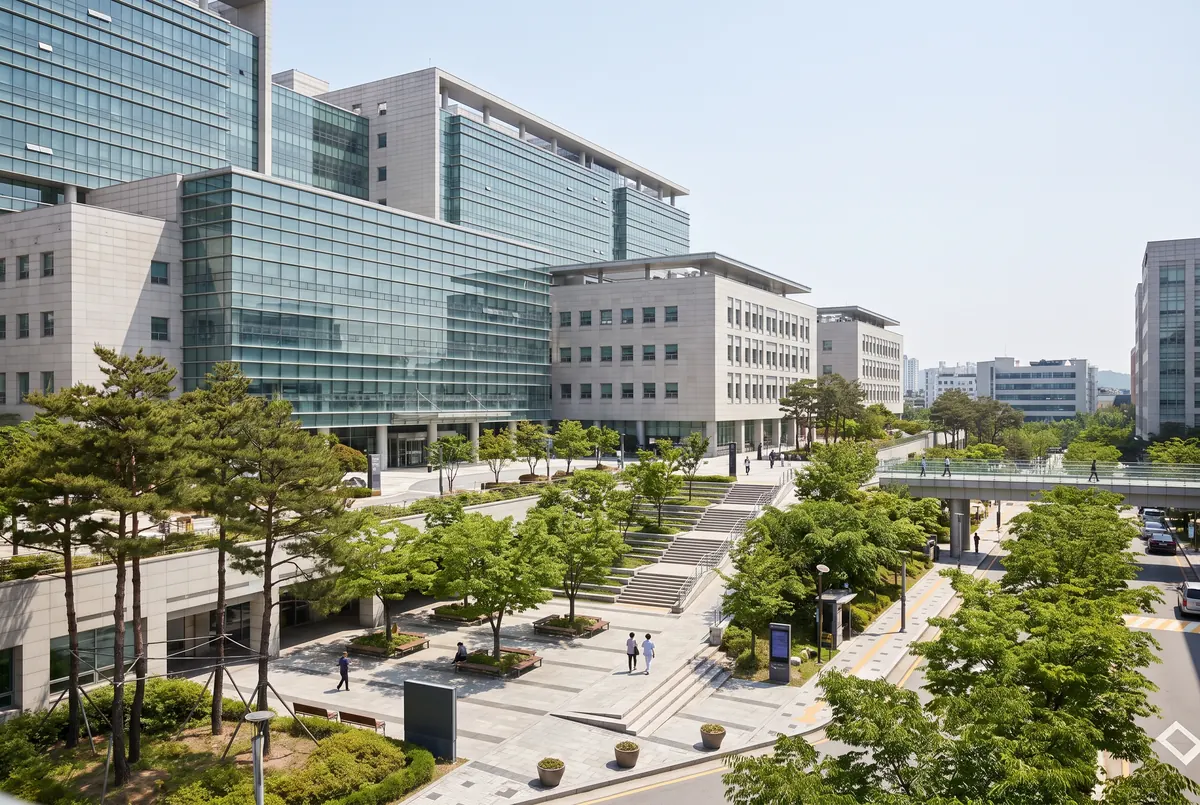
Korea divides its healthcare facilities into distinct tiers. Understanding this hierarchy saves time and money.
Tier 1 — Local Clinics (의원, euiwon)
Small specialist or general practices, typically 1–3 doctors. These cover the vast majority of everyday health needs: colds, minor injuries, skin issues, blood pressure, diabetes management, basic gynaecology, and more. Most Koreans go here first.
- Walk-in friendly — appointments often not required for minor issues
- Lowest copay — most affordable tier
- Fast turnaround — visits are typically 5–15 minutes
- Language: English availability varies; international areas in Seoul have English-speaking clinics
Tier 2 — General Hospitals (병원, byeongwon)
Mid-size hospitals (usually 30–100+ beds) with multiple departments and specialists. Good for intermediate conditions requiring more investigation or specialist referral.
- Moderate copay
- Appointment recommended for specialist consultations
Tier 3 — University / General Hospitals (종합병원 / 대학병원)
Large teaching hospitals affiliated with universities. These are Korea's flagship medical institutions with cutting-edge equipment and the country's leading specialists.
Major university hospitals with international clinics:
| Hospital | Location | International Clinic |
|---|---|---|
| Seoul National University Hospital (SNUH) | Jongno-gu, Seoul | Yes — English, Chinese, Japanese |
| Severance Hospital (Yonsei) | Sinchon, Seoul | Yes — English, multilingual |
| Asan Medical Center | Songpa-gu, Seoul | Yes — International Health Care Center |
| Samsung Medical Center | Gangnam-gu, Seoul | Yes — International Health Center |
| Korea University Anam Hospital | Seongbuk-gu, Seoul | Yes |
| Pusan National University Hospital | Busan | International Health Center |
The referral rule: To use NHIS at a university hospital at standard rates, you should have a referral letter (진료의뢰서) from a smaller clinic. Without one, the hospital may still see you but you pay a surcharge (extra consultation fee not covered by NHIS). For emergencies, this does not apply.
Tier 4 — Public Health Centres (보건소, bogeon-so)
Government-operated community health centres in every district. They offer low-cost or free basic services including vaccinations, tuberculosis screening, STI testing, and some chronic disease management.
- Very affordable (often free or minimal charge for vaccinations)
- Useful for required health checks (E-2 visa health examination is done here for applicable visa holders)
- Limited English — bring a Korean speaker if possible
6. How to Visit a Doctor: Step by Step
Before You Go
- Identify the appropriate facility type (local clinic for minor issues, specialist clinic or hospital for specific concerns)
- For international clinics: book in advance — walk-ins are often not accepted
- For local clinics: walk-ins are generally fine
What to Bring
- ARC (your ARC number is your NHIS membership number)
- NHIS card (arrives by post; your ARC number works before the card arrives)
- Passport (some facilities request it as backup ID)
- List of any medications you currently take — preferably in Korean or generic drug names
- Any relevant past medical records or test results
At the Reception Desk
Tell the receptionist you are a foreigner. Hand over your ARC or NHIS card. You will be registered in the hospital system and given a patient number. Wait for your number to appear on the digital display board.
With the Doctor
Doctor visits in Korea are efficient but brief — typically 5–15 minutes even for significant concerns. Korean doctors generally do not explain procedures in extensive detail unless asked; this reflects cultural norms around medical authority. If you have questions:
- Ask them directly and politely
- Use a translation app (Papago or Google Translate) if language is a barrier
- Request written notes or a copy of your medical records
Paying
Pay at the counter before leaving. Most hospitals and clinics accept foreign credit cards. Payment terminals in larger hospitals often have English options.
Getting Your Medicine
After your appointment, take your prescription (처방전) to any nearby pharmacy (약국). In Korea, the doctor prescribes and the pharmacy dispenses — you do not receive medicine at the clinic. Prescriptions are typically single-use and valid for a few days. The pharmacist will explain how to take the medication.
7. Finding English-Speaking Doctors & International Clinics
How to Find English-Speaking Care
For general and specialist care:
- Korea Health Pages — database of English-friendly clinics and hospitals nationwide
- Goodoc app — book appointments with English-speaking doctors
- Seoul Global Center (02-2075-4180) — referral assistance, translation support
- Medical Korea Information Center — 1577-7129 (multilingual, including English, Chinese, Russian, Japanese)
For expat communities and recommendations:
- Facebook groups: "Seoul Expats," "foreigners in [city]," city-specific expat groups
- Reddit: r/korea, r/koreaexpats — real experiences from fellow residents
Recommended English-Friendly Facilities
Seoul:
- Severance International Clinic (Yonsei) — comprehensive, multilingual staff
- Asan Medical Center International Health Care Center — English, Chinese, Japanese
- Samsung Medical Center International Health Center
- Seoul Foreign Clinic (Itaewon) — expat-focused general practice
- Dr. Kim's International Clinic (Yongsan)
- Trinity Women's Clinic — popular among female expats for gynaecology
- KMI Health Check-Up Centres — English-friendly annual health checks
Busan:
- Pusan National University Hospital International Health Center
- International Clinic at Inje University Haeundae Paik Hospital
Calling ahead is always recommended to confirm English availability — even at international clinics, English-speaking doctors may not be present every day.
Practical Language Tips
- Most Korean doctors who trained post-2000 read English medical literature and can communicate basic medical concepts in English, though fluency varies.
- Use Papago (better for Korean-English medical translation than Google Translate)
- Write down your symptoms in Korean in advance — many translation apps allow this
- Keep a short medical history document in both English and Korean: blood type, allergies, current medications, chronic conditions
8. Pharmacies (약국): Prescriptions & Over-the-Counter Medicine
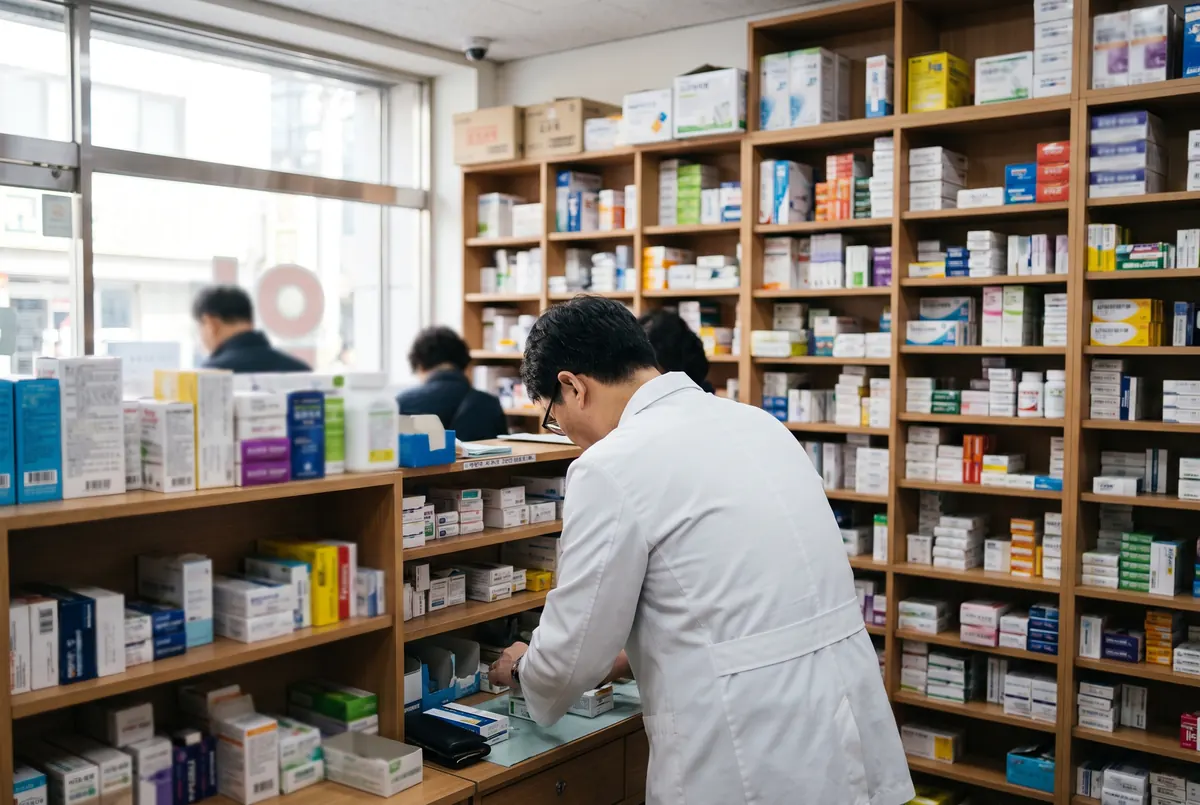
Look for the green or red cross sign with the character 약 (yak, meaning "medicine") to find a pharmacy. They are everywhere in Korea — near clinics, in shopping areas, and in most residential neighbourhoods.
How Korean Pharmacies Work
Korean pharmacies operate very differently from Western supermarket pharmacies:
- All pharmaceutical medications are kept behind the counter — there is no self-service browsing for medicines (unlike US pharmacies with open shelves).
- You interact directly with the pharmacist (약사) for everything, including common OTC items.
- Prescription required for all prescription drugs. Bring your written prescription from the doctor.
- Prescriptions are single-use — the pharmacist retains the original; you cannot reuse it.
- NHIS covers approximately 70% of prescription drug costs — you pay the remaining 30% copay.
Getting OTC Medication
For non-prescription items (cold medicine, pain relievers, antacids, allergy medication), ask the pharmacist directly:
- State your symptom in Korean or show a translation
- The pharmacist will recommend an appropriate product
Common Korean OTC brands you will recognise (approximate English equivalents):
- 타이레놀 (Tylenol) — paracetamol/acetaminophen
- 부루펜 (Brufen) — ibuprofen
- 지르텍 (Zyrtec) — cetirizine (antihistamine)
- 판콜 (Pankol) — combination cold medicine
- 베아제 (Bearse) — digestive enzyme medication
Important OTC Differences
Some medications that are OTC in your home country require a prescription in Korea (and vice versa). This is common for:
- Stronger antihistamines
- Some sleep aids
- Certain antibiotics that are OTC in some Asian countries but prescription-only in Korea
Always confirm with the pharmacist and never self-medicate based on assumptions about availability.
Pharmacy Hours
Most pharmacies are open:
- Monday–Friday: 9 AM – 7 PM (varies)
- Saturday: often mornings only
- Sunday and public holidays: many pharmacies are closed
For after-hours medicine needs:
- Search Naver Maps for "야간약국" (night pharmacy) near you — each district maintains a rotating duty pharmacy open late
- Convenience stores (GS25, CU, 7-Eleven) stock basic OTC items such as pain relievers, cold remedies, and digestive tablets when pharmacies are closed
- Olive Young stores (health/beauty retail) also stock some OTC medications during their opening hours
Bringing Medications from Abroad
- Bring a sufficient supply of any daily prescription medications from your home country for the initial months, plus documentation (prescription, doctor's letter) in English.
- If your medication contains a controlled substance (opioids, benzodiazepines, certain ADHD medications), declare it at customs and carry documentation — Korean customs controls are strict.
- Some medications available in your home country may not be approved in Korea or may be under a different brand name. Consult a Korean doctor soon after arrival to arrange equivalent prescriptions.
- Korean psychiatrists can often find equivalent medications, but the transition may require an in-person consultation and may take a few weeks.
9. Dental Care in Korea
Dental care in Korea is generally affordable and of high quality, particularly in Seoul and other major cities. However, understanding what NHIS covers versus what you pay out of pocket is important.
What NHIS Covers (Dental)
- Scaling (치석 제거): 1 session per year covered for adults 19+ (approximately ₩12,000–₩20,000 copay)
- Fillings: Standard composite and amalgam fillings at local dental clinics
- Extractions: Simple tooth extractions
- Root canals: Basic root canal treatment
- Dentures: Partially covered for adults 65+ (significant subsidy)
- Dental implants: Partially covered for adults 65+ (up to 2 implants per lifetime; you pay 30% of the cost)
What Is NOT Covered by NHIS (Dental)
- Braces (orthodontic treatment)
- Teeth whitening
- Veneers
- Most implants for adults under 65
- Invisalign and cosmetic alignment
- Teeth cleaning beyond the 1 annual NHIS-covered session
Typical Out-of-Pocket Costs (Without Extra Insurance)
| Procedure | Approximate Cost |
|---|---|
| Consultation | ₩5,000–₩15,000 |
| X-ray | ₩10,000–₩30,000 |
| Filling (composite) | ₩50,000–₩150,000 |
| Root canal | ₩200,000–₩500,000 |
| Extraction | ₩20,000–₩80,000 |
| Dental implant | ₩800,000–₩2,000,000 per tooth |
| Braces (full treatment) | ₩2,000,000–₩5,000,000 |
Dental prices vary significantly by clinic and location. Gangnam and Itaewon-area clinics in Seoul often charge more, while clinics outside prime areas may offer significantly lower prices.
Medical tourism tip: Korea is a popular destination for dental tourism — prices for implants and cosmetic dental work are often 30–60% lower than in Western countries even when paying entirely out of pocket.
10. Mental Health Resources in English
Mental health awareness in Korea is growing, though stigma remains higher than in many Western countries. As a foreigner, it is important to know that support is available — do not let cultural context prevent you from seeking care.
NHIS Coverage for Mental Health
Psychiatrist (정신건강의학과) visits are covered by NHIS at standard clinic rates. Prescribed psychiatric medication is also covered with the standard 30% copay. Basic psychiatric care is genuinely affordable in Korea for those with NHIS.
However, talk therapy and counselling sessions (심리상담) with psychologists or counsellors are typically not covered by NHIS and require private payment (typically ₩80,000–₩150,000 per 50-minute session).
Finding English-Speaking Mental Health Support
Private therapists and psychiatrists (English-speaking):
- Seoul Counseling (seoulcounseling.com) — directory of English-speaking therapists
- Seoul Foreign Clinic (Itaewon) — general and psychiatric care in English
- Gangnam Severance Hospital — international patients department, psychiatry available
- In Mind (inmindkorea.com) — English-language mental health clinic, online and in-person
- The Korean-American Counseling Center — multilingual counselling
Online therapy platforms (accessible from Korea):
- BetterHelp and Talkspace — US-based platforms accessible from Korea; useful if you prefer your home country's approach
- Therapy in Korea Facebook group — peer recommendations from expats
Crisis Hotlines
| Service | Number | Language | Hours |
|---|---|---|---|
| Suicide Prevention Hotline | 109 (replaced 1393 in 2024) | Korean (some English) | 24/7 |
| Mental Health Crisis Line | 1577-0199 | Korean | 24/7 |
| Lifeline Korea | 1588-9191 | Korean/English | 24/7 |
| Seoul Global Center | 02-2075-4180 | English | Weekdays 9–18 |
| Foreign residents crisis (Emergency) | 119 | Some English | 24/7 |
Cultural Context for Mental Health in Korea
Korea's mental health culture is evolving but still differs from Western norms:
- Many Koreans first seek help through internal medicine (내과) physicians for stress-related symptoms — fatigue, insomnia, digestive issues — before approaching a psychiatrist
- Mental health diagnoses can carry social stigma in some contexts, though this is changing rapidly among younger Koreans
- Korean psychiatrists typically take a medication-first approach with more conservative dosing than some Western practitioners
- Bring full documentation of your current medications (names, dosages, prescribing information) when seeing a Korean psychiatrist for the first time
11. Emergency Services: What to Do in a Crisis
Emergency Numbers
| Service | Number | Notes |
|---|---|---|
| Medical emergency / Ambulance | 119 | Free ambulance; limited English but improving |
| Police | 112 | Limited English; have your address ready in Korean |
| KDCA disease information hotline | 1339 | 24/7; foreign-language help via three-way call with 1330 or 1345 |
| Korea Tourism Hotline | 1330 | English, Chinese, Japanese; can redirect |
| Hospital emergency rooms | Varies | Go directly if time-sensitive |
Using the Emergency Room (응급실)
- Emergency rooms are located in general hospitals and university hospitals
- Walk directly to the emergency entrance (응급실)
- Bring your ARC and NHIS card — if you don't have them in an emergency, your passport will do
- NHIS covers emergency room visits at 20% copay rate
- Ambulances are free to call but charge a distance-based service fee
- Ambulances may not have English-speaking staff; sending your location and using a translation app can help
The 2024–2025 Hospital Crisis Context
Korea experienced a significant healthcare disruption in 2024–2025 due to a protracted dispute between the government and medical residents (trainee doctors) over a proposed increase in medical school admissions. Many residents stopped working, causing reduced capacity at large university hospitals — longer wait times, fewer elective surgeries, and strained emergency rooms. Most trainee doctors returned in September 2025, bringing resident numbers back to about 76% of pre-dispute levels; the 2026 medical school quota was reset to 3,058, and in February 2026 the government approved a smaller, phased increase from 2027 (490 extra places in 2027) tied to a new regional-doctor track.
Practical impact for foreigners:
- Local clinics (의원) and community hospitals remain largely unaffected — use these for non-urgent needs
- Major university hospitals have reduced capacity for specialist appointments
- Emergency rooms are more congested than usual
12. Maternity & Prenatal Care for Expats
Korea offers strong maternity support, including significant subsidies for foreign residents enrolled in NHIS.
NHIS Maternity Benefits
- National Happiness Card (국민행복카드): Upon confirming pregnancy, NHIS provides a voucher of ₩1,000,000 for a single pregnancy (₩1,000,000 per baby for twins or more, plus ₩200,000 in areas with few maternity clinics) to cover prenatal check-ups, ultrasounds, and other maternity expenses.
- Apply at any NHIS office or online
- Available to all NHIS members including foreigners
- Prenatal check-ups: Standardized series of check-ups are covered under NHIS
- Hospital delivery: No copayment for covered delivery costs — both natural birth and caesarean section (0% since January 2025)
- Postpartum nursing (산후조리원): Postpartum care centres (sanhujoriwon) are not covered by NHIS but are extremely popular in Korea; expect ₩2M–₩5M for a 2-week stay
Finding an English-Speaking OB/GYN
- Trinity Women's Clinic (Seoul) — popular among expat women
- CHA Gangnam Medical Center — multilingual obstetrics including English
- Asan Medical Center International Clinic — full prenatal and delivery services
- Gangnam Severance — international obstetrics department
Important: Korea has one of the world's highest caesarean section rates. If you have a preference for natural birth, discuss this explicitly with your doctor early in prenatal care.
13. Vaccinations & Health Checks
Free Annual Health Check (건강검진)
NHIS provides all members with a free comprehensive health check-up:
- Every 2 years for adults aged 20 and over
- Annually for employees in non-office (manual) jobs
The check includes blood pressure, blood sugar, cholesterol, cancer screenings, BMI, and vision/hearing. You will receive a notification letter from NHIS. KMI centres and selected clinics offer this check in English.
Vaccinations
Routine vaccinations can be obtained at:
- Public health centres (보건소): Free or heavily subsidized for many vaccines (flu, tetanus, HPV for eligible age groups). Limited English but staff are often patient.
- International clinics: Full vaccine catalogue available with English support; out-of-pocket cost without NHIS subsidies
Common vaccinations foreigners seek in Korea:
- Influenza (flu) — free annually for over-65s, children and pregnant women; low cost for all
- COVID-19 vaccines — free each autumn for over-65s and immunocompromised people at designated clinics and public health centres
- HPV (Gardasil) — covered by NHIS for girls aged 12–17; out-of-pocket for adults
- Hepatitis A and B — available; check your current status before arrival
Required Health Checks by Visa Type
| Visa | Required Checks |
|---|---|
| E-2 (Foreign Language Instructor) | HIV, tuberculosis — at a designated hospital within 90 days of arrival |
| D-2, D-4 students from 19 specific countries | Tuberculosis check at a public health centre before ARC issuance |
| All foreigners applying for ARC from the 19 designated countries | Mandatory health screening |
14. Traditional Korean Medicine (한의학)
Traditional Korean medicine (한의학, hanuihak) is a fully integrated part of Korea's national health system — not an alternative fringe. It includes:
- Acupuncture (침술)
- Herbal medicine (한약)
- Moxibustion (뜸)
- Cupping (부항)
- Manual therapy (추나)
Traditional Korean medicine clinics are called 한의원 (hanuiwon) and are staffed by licensed practitioners (한의사, hanuisa) who complete 6-year university programmes. NHIS covers select treatments including acupuncture, moxibustion, and some manual therapies.
Many Koreans use traditional medicine alongside Western medicine, especially for musculoskeletal pain, fatigue, digestive issues, and recovery from illness. It is worth exploring if you are interested — expect the herbal medicine (decoctions) to be strongly flavoured.
15. Glossary of Korean Healthcare Terms
| Korean | Pronunciation | English Meaning |
|---|---|---|
| 병원 | byeongwon | Hospital / clinic (general) |
| 의원 | euiwon | Small local clinic |
| 응급실 | eunggeuksil | Emergency room |
| 약국 | yakguk | Pharmacy |
| 약사 | yaksa | Pharmacist |
| 의사 | uisa | Doctor |
| 간호사 | ganhosa | Nurse |
| 처방전 | cheobangjeon | Prescription |
| 진찰 | jinchal | Medical consultation / examination |
| 진료의뢰서 | jimnyo uilyoeseo | Referral letter |
| 건강보험 | geongang boheom | National Health Insurance |
| 건강보험증 | geongang boheomjeung | NHIS insurance card |
| 보건소 | bogeonso | Public health centre |
| 본인부담금 | bonin budam-geum | Patient copay |
| 입원 | ibwon | Inpatient / hospitalisation |
| 퇴원 | toewon | Hospital discharge |
| 외래 | oerae | Outpatient |
| 수술 | susul | Surgery / operation |
| 국민행복카드 | gukmin haengbok kadeu | National Happiness Card (maternity voucher) |
| 산후조리원 | sanhujoriwon | Postpartum care centre |
| 한의원 | hanuiwon | Traditional Korean medicine clinic |
| 한의사 | hanuisa | Traditional Korean medicine doctor |
| 침술 | chimsul | Acupuncture |
| 정신건강의학과 | jeongsin geongang uihakgwa | Psychiatry / mental health department |
| 치과 | chigwa | Dental clinic |
| 안과 | angwa | Eye clinic / ophthalmology |
| 산부인과 | sanbuin-gwa | Obstetrics and gynaecology (OB/GYN) |
| 내과 | naegwa | Internal medicine |
| 피부과 | pibugwa | Dermatology |
| 정형외과 | jeonghyeong-oegwa | Orthopaedics |
Frequently asked questions
How much is health insurance for foreigners in Korea?
If you work for a Korean employer, you pay about 4.07% of your gross salary in 2026 (7.19% health insurance plus 0.9448% long-term care, split equally with your employer). If you are locally insured, NHIS calculates your premium from income and assets, but most foreigners pay at least the national average premium, about ₩158,630 a month in 2026. F-5 and F-6 holders are assessed like Koreans, and D-2 or D-4 students pay about ₩79,300.
When do foreigners have to join national health insurance in Korea?
Employees are enrolled by their employer from their first day of work. Other foreign residents are automatically enrolled as locally insured members 6 months after entering Korea. Holders of D-2 (student), D-4-3 (school student), E-9, F-5 and F-6 visas are enrolled from entry, or from foreigner registration if that is later. Short-term visitors cannot join, so carry private insurance until your coverage starts.
Can I add my spouse and children to my Korean health insurance?
Yes. An employee-insured member can register a spouse and children under 19 as dependants straight away if they meet the income and property limits. Since April 2024, other foreign relatives arriving from abroad must first live in Korea for 6 months, unless they hold a D-2, D-4-3, E-9, F-5 or F-6 visa. Locally-insured foreigners can include a spouse and children under 19 in their household.
What happens if I don't pay my NHIS premiums in Korea?
Immigration checks health insurance arrears and generally limits visa extensions to 6 months or less until they are paid. NHIS can also restrict your benefits while you are in arrears, so you would pay the full cost of treatment. Locally-insured foreigners pay each month's premium in advance, by the 25th of the previous month, so setting up automatic bank transfer is the safest option.
How do I find an English-speaking doctor in Korea?
Large university hospitals such as Severance, Seoul National University Hospital, Asan Medical Center and Samsung Medical Center run international clinics with English-speaking staff, but book ahead. Many neighbourhood clinics in Seoul's international areas also speak English. The Medical Korea Information Center (1577-7129) can help you choose a hospital, and the Immigration Contact Center (1345) interprets in 20 languages. Bring your ARC so NHIS coverage is applied.
Is emergency room care covered by health insurance in Korea?
Yes. Call 119 for an ambulance or go straight to a hospital emergency room (응급실); no referral is needed. Genuine emergency treatment is charged at roughly the 20% inpatient copayment, but you pay more if the visit is judged non-urgent. For disease information or to report a suspected infection, KDCA's 1339 line runs 24/7, and 1330 or 1345 can interpret by three-way call.
Official sources
Rules, fees and deadlines change. Confirm the details with the official source before you act.
- National Health Insurance Service – Guidance for foreigners nhis.or.kr
- National Health Insurance Service – Contribution rate nhis.or.kr
- National Health Insurance Service – Insurance benefits, co-payments and ceilings nhis.or.kr
- NHIS – Enrollment of foreigners and overseas Koreans (Korean) nhis.or.kr
- Korea Disease Control and Prevention Agency – 1339 Call Center kdca.go.kr
- Medical Korea Information Center medicalkorea.or.kr
Disclaimer: Healthcare policies, insurance rates, and coverage details change regularly. The information on this page reflects best available data as of October 2026. Always verify current NHIS premiums, coverage rules, and clinic information directly with NHIS (1577-1000), your employer's HR department, or your local NHIS branch. This guide does not constitute medical advice — consult a qualified healthcare professional for personal health decisions.
Last reviewed: · livinginkorea.org