Key facts at a glance
- South Korea has 23 national parks (Palgongsan was added in December 2023) and none charge admission; Hallasan on Jeju is run by Jeju Province, not the Korea National Park Service.
- Climbing to the Hallasan summit on Jeju requires a free advance reservation at visithalla.jeju.go.kr for the Seongpanak and Gwaneumsa trails; lower sections need no booking since May 2025.
- Seoul palace tickets in 2026: Gyeongbokgung and Changdeokgung ₩3,000, Changgyeonggung and Deoksugung ₩1,000; entry is free in hanbok, and a ₩6,000 pass covers four palaces plus Jongmyo.
- Registered foreigners in Korea need no re-entry permit for trips abroad of up to 1 year (F-5 permanent residents: 2 years); longer absences need a ₩50,000 multiple re-entry permit.
- Korea's duty-free allowance for arriving travellers is USD 800 per person, plus up to 2L of alcohol worth up to USD 400, 200 cigarettes and 100ml of perfume.
- Seoul's public bike Ttareungi costs ₩1,000 per hour (₩2,000 for a 2-hour pass), making it a cheap way to ride the Han River cycle paths.
- Korea's K-Pass transit refund (now branded 모두의카드) returns 20-53% of fares to users who ride 15+ times a month, and registered foreign residents can join.
Table of Contents
- Getting Out of Seoul: How to Think About Domestic Travel
- Weekend Trip Ideas from Seoul
- Korea's National Parks & Hiking Culture
- Jeju Island: The Resident's Guide
- Best Food Destinations by Region
- Seasonal Travel: What to Do When
- Temples, Palaces & Cultural Sites
- Nightlife & Entertainment Districts
- Sports & Outdoor Activities
- Travelling Outside Korea: Re-entry & Visa Tips
- Budget Travel Tips for Residents
- Glossary of Travel Terms in Korean
1. Getting Out of Seoul: How to Think About Domestic Travel
One of the great advantages of living in Korea is how compact and well-connected the country is. From central Seoul:
- Suwon, Incheon: 30-60 minutes by subway
- Busan, Gwangju, Jeonju: 2-3 hours by KTX high-speed rail
- Gyeongju: 2 hours by KTX
- Jeju Island: 1 hour by plane
This means almost any Korean destination can be done as a comfortable overnight trip or a long weekend. As a resident — not a tourist — you have the luxury of going off-peak and going back.
Booking Tips for Residents
- Korail (korail.com): Book KTX tickets online in English; the website works reliably. The Korail app is mostly Korean.
- Rail discounts: Korail offers 30-40% early-bird discounts. Book 30+ days ahead for weekend trips.
- Peak avoidance: Major holidays (Chuseok, Seollal, Golden Week in late April/early May) see booking sellouts weeks in advance and road chaos. Travel the week before or after.
- Express buses (고속버스): Significantly cheaper than KTX but 2-3x longer journey. Good for Jeonju, Gyeongju, Andong, and destinations without direct rail.
2. Weekend Trip Ideas from Seoul
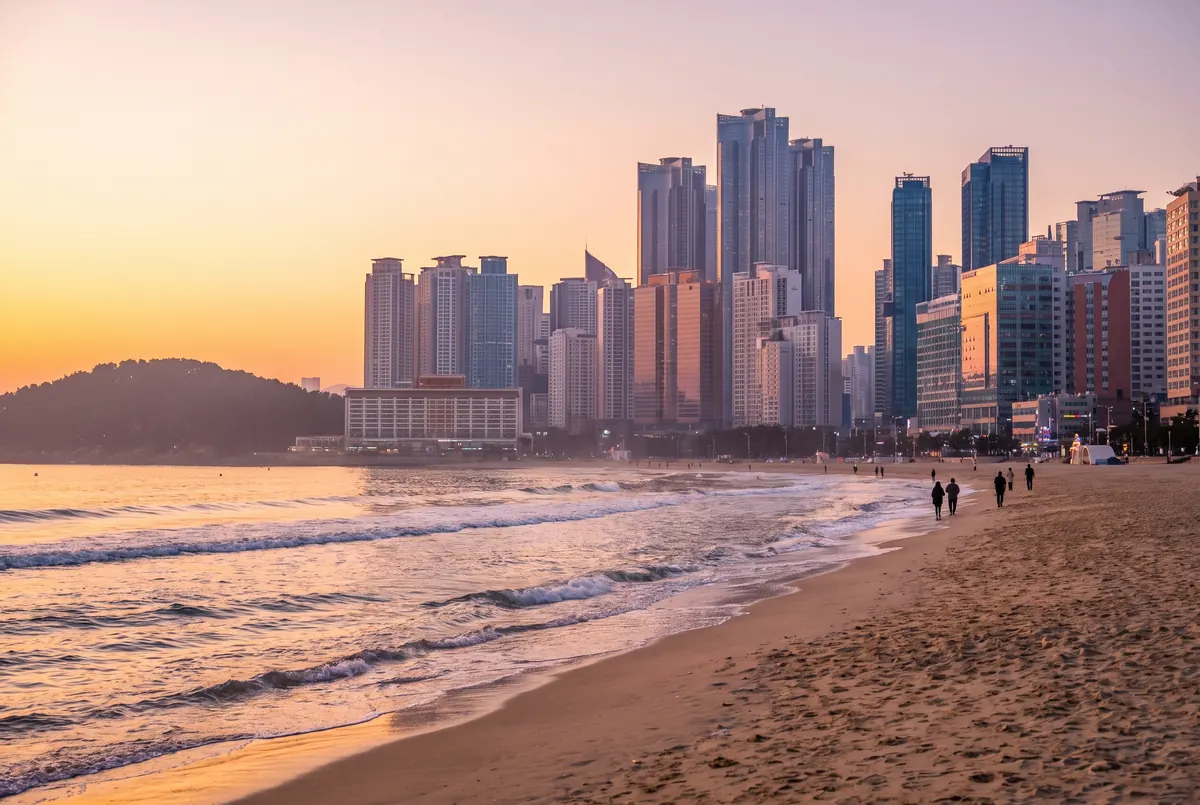
Busan (부산) — 2h 15min by KTX
Korea's second city is the anti-Seoul: coastal, laid-back, hilly, and characterful. Best spots:
- Gamcheon Culture Village: Pastel-coloured hillside neighbourhood, murals, independent cafes
- Haeundae & Gwangalli beaches: City beaches with dramatic bridge backdrop
- Gukje Market & Bupyeong Kkangtong Market: Traditional markets; street food heaven
- Taejongdae park: Coastal cliff walk with lighthouse views
- Jalgachi Fish Market: Eat raw fish (회, hoe) upstairs from the stalls — freshest sashimi in Korea
Best for: Food lovers, beach breaks, contrast to Seoul's pace
Gyeongju (경주) — 2h by KTX
Korea's ancient capital from the Silla dynasty (57 BCE-935 CE). The entire city is effectively an open-air museum — burial mounds rise from park grounds, Buddhist temples dot the hills, and Bulguksa Temple is a masterpiece of Silla architecture.
- Bulguksa Temple & Seokguram Grotto: UNESCO World Heritage
- Tumuli Park (대릉원): Royal burial mounds you can walk among
- Anapji Pond (동궁과 월지): Illuminated at night — stunning
- Cheonmachong: Ancient royal tomb open for interior viewing
Best for: History, culture, cycling (the city is flat and very bikeable), autumn foliage
Jeonju (전주) — 2h by KTX or express bus
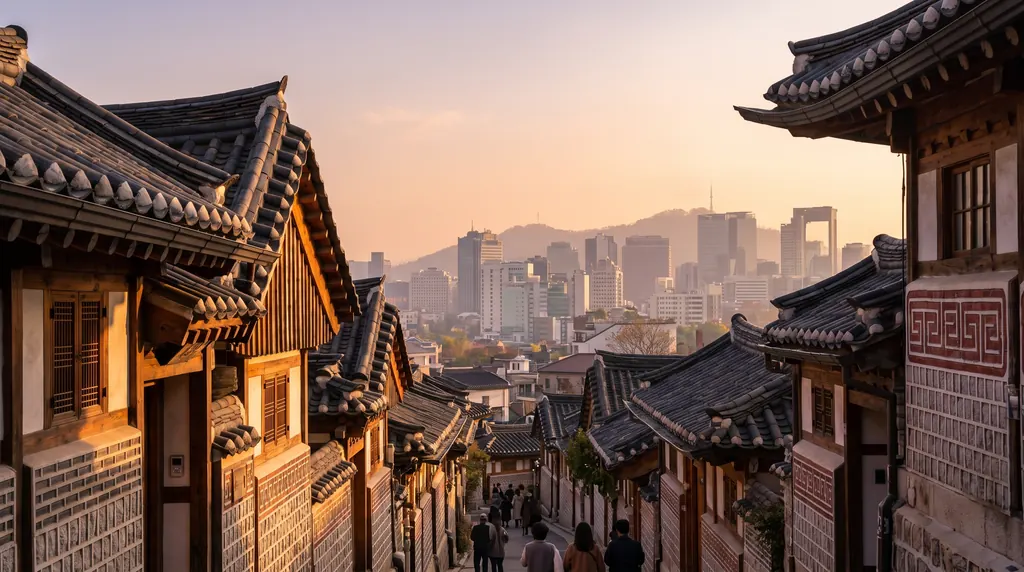
Home of the hanok village (한옥마을) — the most intact traditional Korean neighbourhood in the country. Also the birthplace of bibimbap.
- Jeonju Hanok Village: 700+ traditional Korean houses; cafes, craft shops, bibimbap restaurants
- Jeonju bibimbap: The original; try it at a century-old restaurant
- Gyeonggijeon Shrine: Portraits of the Joseon dynasty founders
- Makgeolli scene: Jeonju has excellent traditional rice wine bars with bottomless snacks
Best for: Architecture, food, culture, slow travel
Sokcho & Seoraksan (속초/설악산) — 2.5h by express bus
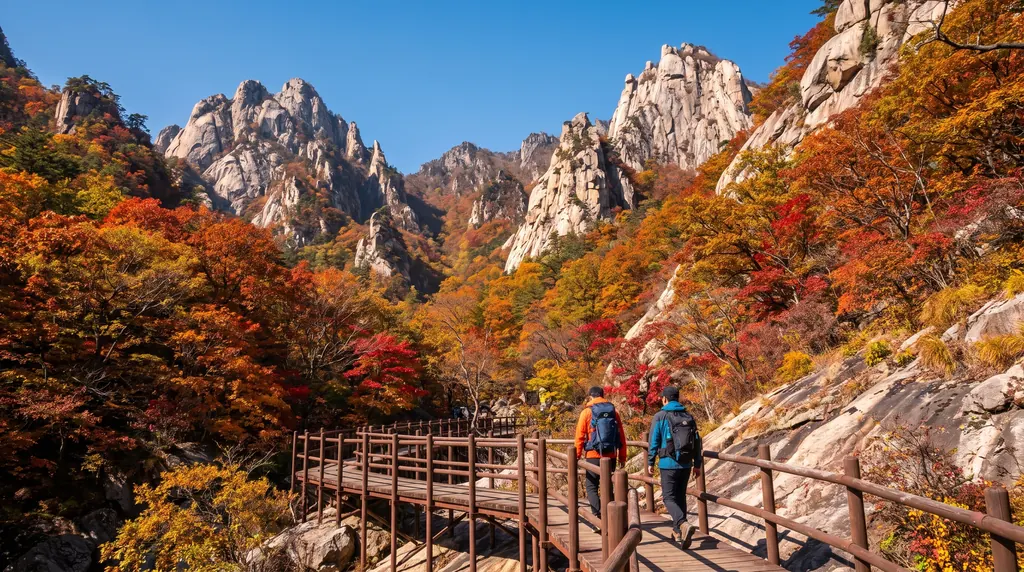
The gateway to Seoraksan National Park — Korea's most dramatic mountain scenery. Sokcho is a coastal town with excellent seafood; Seoraksan rises behind it.
- Ulsanbawi Rock: 6km round hike to famous rock formations; stunning views
- Seoraksan cable car: Quick access to mountain views for non-hikers
- Sokcho's seafood: Ojingeo (squid) and fresh crab — the best in Korea
- Naksansa Temple: Coastal Buddhist temple dramatically set above the East Sea
Best for: Hiking, autumn foliage (October), seafood, mountain scenery
Andong (안동) — 2.5h by bus or train
One of Korea's most historically preserved cities. Home of the Confucian heritage culture and the iconic Andong hahoe village.
- Hahoe Folk Village: UNESCO World Heritage; traditional houses still inhabited
- Dosan Seowon Confucian Academy: On 1,000-won note — see it in real life
- Andong Jjimdak (안동찜닭): Braised chicken; a local specialty worth the trip alone
- Soju Museum: Andong produces Korea's traditional premium soju
Best for: Culture, history, authenticity; fewer foreign tourists than other destinations
Gangwon State (강원특별자치도) — Various
- Spring: Tulip and canola flower festivals (Taean, Jeju)
- Summer: East Coast beaches (Jeongdongjin, Naksan, Yangyang); surfing at Sokcho
- Autumn: Namiseom Island (남이섬) — maple/ginkgo trees at peak; iconic Korea scene
- Winter: Ski resorts — Yongpyong, High1, Vivaldi Park (1.5-2.5h from Seoul)
3. Korea's National Parks & Hiking Culture
Hiking (등산, deungsan) is Korea's national pastime. On any given weekend, thousands of Koreans of all ages take to the trails — many in full matching hiking gear with colour-coded walking poles and elaborate packed lunches.
Korea has 23 national parks (국립공원) — Palgongsan (Daegu) became the 23rd at the end of 2023. All except Hallasan (run by Jeju Province) are maintained by the Korea National Park Service (knps.or.kr — Korean only; use your browser's translate function). Entry to national parks is free.
Top National Parks for Expat Hikers
| Park | Location | Highlight | Difficulty |
|---|---|---|---|
| Bukhansan (북한산) | Inside Seoul | Accessible mountain granite peaks; views of Seoul | Moderate |
| Seoraksan (설악산) | Gangwon | Korea's most dramatic alpine scenery | Moderate-Hard |
| Jirisan (지리산) | South | Korea's largest mainland park; multi-day ridge walk | Hard |
| Hallasan (한라산) | Jeju | South Korea's highest peak (1,947m) | Hard |
| Naejangsan (내장산) | Jeonbuk | Best autumn foliage in Korea | Easy-Moderate |
| Gyeryongsan (계룡산) | Chungnam | Close to Daejeon; beautiful; less crowded | Moderate |
Practical Hiking Tips
- Trail apps: Use Naver Map for trail details; the Korea National Park Service site (knps.or.kr) for trail closures and conditions
- Trail times: Korea's national parks have cut-off times — turn back times enforced by rangers. Check before you go.
- Hallasan reservation: The summit (Baengnokdam) sections of Hallasan's Seongpanak and Gwaneumsa trails require advance reservation (free) at visithalla.jeju.go.kr — Hallasan is run by Jeju Province, not the Korea National Park Service. Book weeks ahead.
- Gear culture: Koreans take hiking gear seriously. You will be underdressed in regular clothes — the culture revolves around proper footwear and layers.
- Mountain restaurants (산장): Many popular peaks have simple restaurants selling makgeolli (rice wine), instant noodles, and pajeon (Korean pancakes) near the summit. A uniquely Korean trail experience.
4. Jeju Island: The Resident's Guide
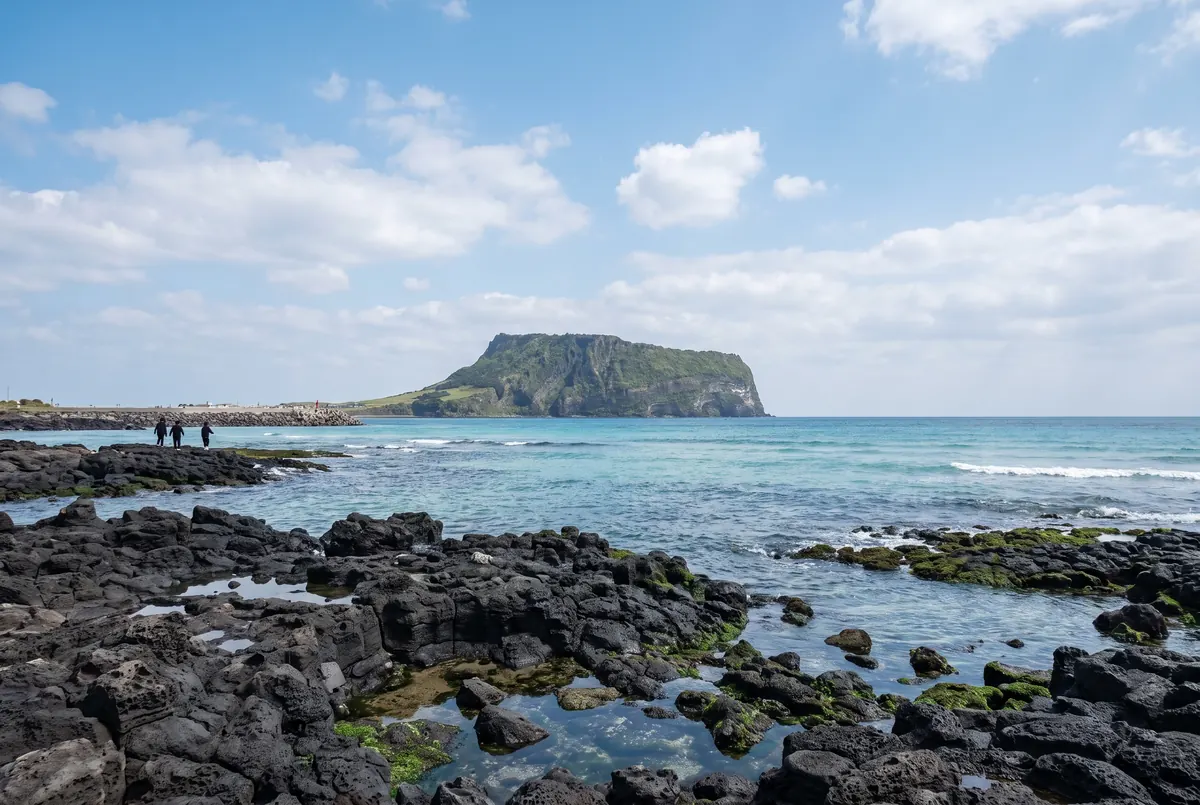
Jeju (제주도) is South Korea's largest island, 1 hour south of the mainland by plane, and the country's most-visited destination. As a resident, you can explore it at leisure rather than on a rushed tourist schedule.
Getting There
- Fly: Multiple daily flights from Seoul (Gimpo or Incheon) and most major Korean cities. Budget carriers (Jeju Air, T'way, Jin Air) offer tickets from ₩30,000-₩80,000 one-way. Book early for weekends.
- Ferry: Overnight ferry from Incheon (~13 hours) or Busan (~12 hours). Cheaper than flying; scenic but slow.
Transport on Jeju
Jeju's attractions are spread across the island — unlike Seoul, public buses can reach many places but are infrequent. Renting a car is the best option for flexibility.
- Korean driver's license required (or IDP for visitors)
- Rental from ₩30,000-₩70,000/day for compact cars
- Navigation via Kakao or Naver Map — GPS quality is excellent on Jeju
Must-Do Experiences
Natural:
- Hallasan National Park: South Korea's highest peak (1,947m), dormant volcano; multiple trails from easy (Eorimok, 3h) to hard (Seongpanak-Gwaneumsa summit, 8-9h). Advance reservation required for summit trails.
- Seongsan Ilchulbong (Sunrise Peak): UNESCO tuff cone crater; 45-min hike to the rim; dawn views extraordinary
- Manjanggul Lava Tube: One of the world's longest lava tubes; 1km open to visitors; cool even in summer
- Jeju Olle Trail: 437km coastal walking network in 27 segments (~16km each). Each segment is a self-contained day walk accessible by bus. Autumn and spring are ideal.
- Hyeopjae Beach: White sand, turquoise water; the most photogenic beach in Korea
Cultural:
- Haenyeo (해녀) diving demonstration: Jeju's legendary female free-divers, aged 60+, dive year-round for seafood. See them at Seongsan Ilchulbong or the Haenyeo Museum.
- Jeju Folk Village: Traditional life of Jeju's communities; thatched-roof homes, folk customs
- Black pork BBQ (흑돼지): Jeju's indigenous black pigs produce sweeter, more flavourful pork than mainland breeds. Try it at a traditional BBQ restaurant in Seogwipo.
Best Time to Visit (for Residents)
- Avoid: July-August (peak summer; crowded, hot, humid, typhoon risk); Chuseok week
- Best: April-June (warm, flowers, fewer crowds); September-November (ideal hiking weather, fewer tourists)
- Worth it: January-February (Hallasan snow; quiet island; camellia flowers)
5. Best Food Destinations by Region
Korea's regional food cultures are dramatically different. As a resident, exploring regional cuisine is one of the great pleasures.
| Region / City | Signature Foods |
|---|---|
| Seoul | Korean fried chicken, tteokbokki, street food markets (Gwangjang, Namdaemun), everything from every region |
| Busan | Raw fish (hoe), dwaeji gukbap (pork soup with rice), milmyeon (cold wheat noodles), Jagalchi fish market |
| Jeonju | Bibimbap (the definitive version), makgeolli, kongnamul gukbap (bean sprout soup with rice) |
| Andong | Jjimdak (soy-braised chicken), heotjesabap, traditional Andong soju |
| Gyeongju | Hwangnam bread (sweet red bean pastry), ssambap, traditional confections |
| Jeju | Black pork BBQ, haemul (seafood stew), Jeju tangerines, abalone porridge |
| Chuncheon | Dakgalbi (spicy stir-fried chicken), makguksu (buckwheat noodles) |
| Sokcho | Ojingeo (squid), crab dishes, raw seafood platters |
| Daejeon | Sikdang culture (many restaurants); Okgol-dong chicken alley |
6. Seasonal Travel: What to Do When
Spring (March-May)
The most beloved season for Korean travel. Cherry blossoms (벚꽃, beotkkot) bloom from late March in the south, reaching Seoul in early April — for about 2 weeks.
Best spots for cherry blossoms:
- Yeouido Hangang Park (Seoul): The most famous; crowded but spectacular
- Jinhae (Gyeongnam): The largest cherry blossom festival in Korea; small naval city becomes extraordinary
- Gyeongju: Petals along the ancient moat of Donggung Palace
Other spring highlights: yellow forsythia, pink magnolias, green paddy fields beginning in May.
Summer (June-August)
Hot, humid, and rainy during monsoon season (장마, jangma): typically mid-June through late July. After the rains, beaches become the focus.
Summer highlights:
- East Coast beaches: Yangyang (surfing culture), Naksan, Sokcho
- Boryeong Mud Festival: Late July; enormous and silly; hugely popular with foreigners
- Gyeongbokgung Night Palace: Special evening openings of Seoul's palaces during summer; atmospheric
Autumn (September-November)
Many Koreans and expats consider autumn the best season. Crisp air, clear skies, fiery foliage.
Best autumn foliage destinations:
- Naejangsan National Park: Peak colour usually mid-to-late October; maple tunnel trails
- Seoraksan: High-altitude early colour; typically starts late September
- Namiseom Island (남이섬): Iconic golden ginkgo and maple lined paths; accessible by ferry from Gapyeong
Chuseok: Major holiday typically in September or October. Plan around it.
Winter (December-February)
Cold (-10C to -15C possible in Seoul) but often brilliantly clear skies. Ski season. Fewer foreign tourists.
Winter highlights:
- Skiing: Yongpyong, High1, Vivaldi Park, Elysian Gangchon — 1.5-2.5h from Seoul
- Hwacheon Sancheoneo Ice Festival: January; Korea's famous ice fishing and winter festival on frozen rivers
- Gyeongbok Palace snow: A handful of snowfall days per winter transform Seoul's palaces
- Jeju in winter: Camellia flowers, Hallasan snow, fewer crowds
7. Temples, Palaces & Cultural Sites
Seoul's Palaces
Seoul has five royal palaces from the Joseon dynasty (1392-1897), all accessible by public transport.
| Palace | Korean | Notes |
|---|---|---|
| Gyeongbokgung | 경복궁 | Largest; main palace; Changing of the Guard ceremony |
| Changdeokgung | 창덕궁 | UNESCO World Heritage; includes the beautiful Secret Garden (후원, Huwon) |
| Changgyeonggung | 창경궁 | Quieter; connected to Jongmyo Shrine |
| Deoksugung | 덕수궁 | In the centre of the city; Changing of the Guard |
| Gyeonghuigung | 경희궁 | Least visited; peaceful |
Admission: Gyeongbokgung and Changdeokgung charge ₩3,000; Changgyeonggung, Deoksugung and Jongmyo ₩1,000; Gyeonghuigung is free. Entry is free for foreigners aged 18 and under or 65+ and for anyone wearing hanbok — an ARC alone does not give free entry. The integrated palace pass (₩6,000, valid 6 months) covers the four main palaces and Jongmyo Shrine (the Secret Garden tour is extra).
Hanbok rental: Wearing traditional Korean clothes (한복) in the palace grounds is free of charge for entry to most palaces. Rental shops near each palace charge ₩15,000-₩30,000 for a 2-4 hour rental.
UNESCO Sites in Korea
| Site | Location | Notes |
|---|---|---|
| Bulguksa Temple & Seokguram Grotto | Gyeongju | 8th century Silla masterpiece |
| Changdeokgung Palace | Seoul | Secret Garden and main palace complex |
| Hahoe & Yangdong Villages | Gyeongju / Andong | Intact Joseon-era aristocratic villages |
| Hwaseong Fortress | Suwon | 18th century fortress; impressive walking circuit |
| Jeju Volcanic Island & Lava Tubes | Jeju | Hallasan, Seongsan Ilchulbong, Manjanggul |
| Royal Tombs of the Joseon Dynasty | Scattered nationwide | Beautiful woodland burial mounds |
| Gochang/Hwasun/Ganghwa Dolmen Sites | South Korea | Prehistoric megalithic culture |
| Joseon Dynasty Confucian Academies (Seowon) | Nationwide | 9 academies inscribed 2019 |
8. Nightlife & Entertainment Districts
Seoul
Hongdae (홍대): University area; live indie music, club scene, cheap bars, always busy. Most foreigner-friendly nightlife area. Main clubbing venues around Club FF, Cakeshop, and Machinae.
Itaewon (이태원): International district; diverse bar scene; LGBTQ+ friendly area on "Homo Hill"; Western food, international pubs, rooftop bars. More relaxed atmosphere than Hongdae.
Gangnam (강남): Upscale clubs and bars; higher cover charges; K-pop idol sightings. Apgujeong and Cheongdam for premium venues.
Sinchon / Edae: Student bars; cheaper; classic Korean drinking experience with pojangmacha (tent bars) and Korean pub food.
Insadong / Samcheongdong: Art galleries, tea houses, traditional cafes; better for daytime and evening culture than nightlife.
Busan
Seomyeon: Main entertainment district; clubs, karaoke, restaurants, 24-hour street food.
Haeundae: Beach-adjacent; rooftop bars, casual evening scene, night markets in summer.
Norebang (노래방) — Karaoke
Norebang is a private karaoke room experience — your group gets a room to yourselves for 1-2 hours. Sound systems are genuinely excellent. It is an integral part of Korean night-out culture. Cost: approximately ₩15,000-₩30,000/hour per room (split among the group).
9. Sports & Outdoor Activities
Hiking (등산)
Covered in Section 3 — the most accessible and popular outdoor activity.
Cycling
Korea has an extensive national cycling trail network (국토종주 자전거길) connecting much of the country via dedicated paths along rivers. The Four Rivers Trail (4대강 자전거길) stretches 633km from Seoul to Busan and takes 8-10 days to complete. Seoul's Han River bike paths are excellent for casual rides.
Bike rental: Seoul's 따릉이 (Ttareungi) public bicycle system is affordable (₩1,000/hour) and widely available. Busan and other cities have similar schemes.
Surfing
Yangyang (양양) on the East Coast has become Korea's surf hub — multiple surf schools, consistent waves from spring through autumn, a young and international crowd. Easiest destination for beginner lessons.
Rock Climbing
Bukhansan National Park has excellent granite sport climbing routes accessible from Seoul. Indoor climbing gyms (클라이밍 짐) have proliferated across Korea — very popular among younger Koreans.
Skiing & Snowboarding
Major resorts all within 1-3 hours of Seoul:
| Resort | Distance from Seoul | Notes |
|---|---|---|
| Yongpyong | 2.5h | Largest; hosted 2018 Olympic slalom events |
| High1 | 2.5h | Excellent vertical; good English service |
| Vivaldi Park | 1.5h | Closest to Seoul; popular weekends |
| Elysian Gangchon | 1.5h | Smaller; good for beginners |
Season: approximately December-March. Weekends are packed — go mid-week if possible.
Professional Sports
| Sport | Season | Key Teams |
|---|---|---|
| Korean baseball (KBO) | March-October | LG Twins, Doosan Bears (Seoul), Lotte Giants (Busan) |
| K-League football | March-November | FC Seoul, Jeonbuk Hyundai, Ulsan HD |
| Korean basketball (KBL) | October-March | Seoul Samsung, Ulsan Hyundai Mobis |
KBO baseball games are an excellent expat experience — affordable tickets (₩10,000-₩30,000), lively atmosphere, cheap beer and food at the stadium. Crowd participation culture (synchronised chants for every player) is unique and fun.
10. Travelling Outside Korea: Re-entry & Visa Tips
Re-entry Permit (재입국 허가)
Most long-term visa holders do NOT need a re-entry permit for trips under 1 year — they are automatically exempt. The key exceptions:
- F-5 (permanent resident): Must return to Korea within 2 years or your PR status lapses
- Visa applicants with a pending application: Leaving Korea cancels your in-progress application unless you have a valid re-entry permit
- Trips longer than 1 year: Registered foreigners (including G-1 holders) need a multiple re-entry permit (₩50,000, via HiKorea or an immigration office) to stay abroad for more than 1 year and up to 2 years
If in doubt, confirm your status at your local immigration office or via HiKorea before any international trip.
Popular Short Trips from Korea
Korea's geographic position makes it an ideal base for regional exploration:
| Destination | Approx. Travel Time | Notes |
|---|---|---|
| Tokyo / Osaka (Japan) | 2h by flight | Day trips and long weekends popular; visa-free for most nationalities |
| Fukuoka (Japan) | Overnight ferry from Busan or 1h flight | Excellent ramen; compact; very popular for a night |
| Hong Kong | 3h by flight | Shopping, dim sum, hiking; visa-free for most |
| Taiwan (Taipei) | 2.5h by flight | Night markets, mountains, excellent food |
| Bangkok | 5h by flight | Winter escape; popular with Seoul-based expats |
| Vietnam (Hanoi / Ho Chi Minh) | 4.5h by flight | Excellent winter destination; visa-free for many nationalities |
Bringing Items Back to Korea
When returning to Korea with purchased goods abroad:
- Duty-free allowance: USD 800 per person, plus alcohol up to 2L in total (worth up to USD 400), 200 cigarettes and 100ml of perfume
- Items exceeding this value must be declared at customs
- Certain food items (meat products, fresh produce) have restrictions — check with Korea Customs Service before travel
11. Budget Travel Tips for Residents
As a resident (not a tourist paying foreign prices), you have access to Korean pricing.
- Book KTX 30+ days ahead for 30-40% early-bird discounts
- K-Pass transit card (K-패스, now branded 모두의카드): For frequent public transport users (15+ rides a month); refunds of 20-53% of fares depending on age and income, or a fixed monthly cap; registered foreigners can sign up
- ARC discounts: Some national parks, cultural sites, and museums offer free or discounted entry to foreign residents with ARC (not always advertised — ask)
- Visit attractions on weekdays: No crowds; same experience
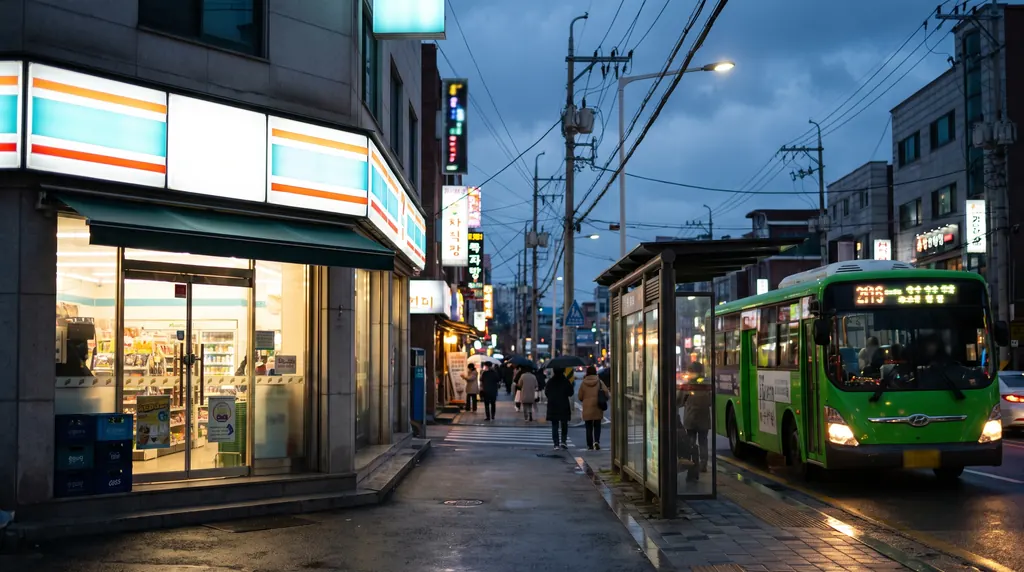
- Use 24-hour convenience stores for meals on trips: A rice ball, ramyeon, and coffee from a convenience store is genuinely good and costs ₩3,000-₩5,000
- Guesthouses and hanok stays: ₩30,000-₩60,000/night in many heritage cities; clean, atmospheric, far cheaper than hotels
- Package day tours (from Seoul): T-money card + tour bus operators like KoTour offer English-language day trips to Gyeongju, Jeonju, and DMZ for ₩50,000-₩80,000 including transport and guide
12. Glossary of Travel Terms in Korean
| Korean | Pronunciation | English Meaning |
|---|---|---|
| 여행 | yeohaeng | Travel / trip |
| 관광 | gwangwang | Tourism / sightseeing |
| 기차역 | gichayeok | Train station |
| 버스터미널 | beoseu teomineol | Bus terminal |
| 공항 | gonghang | Airport |
| 숙소 | sookso | Accommodation |
| 여관 | yeogwan | Guesthouse / inn |
| 펜션 | pension | Pension / private guesthouse |
| 한옥 | hanok | Traditional Korean house |
| 산 | san | Mountain |
| 등산 | deungsan | Hiking / mountaineering |
| 해수욕장 | haesuyokjang | Beach (swimming beach) |
| 사찰 | sachal | Buddhist temple |
| 궁 | gung | Palace |
| 유네스코 | UNESCO | UNESCO |
| 입장료 | ipjangnyo | Admission fee |
| 예약 | yeyak | Reservation / booking |
| 왕복 | wangbok | Round trip |
| 편도 | pyeondo | One-way |
| 노래방 | noraebang | Private karaoke room |
| 포장마차 | pojangmacha | Street food tent bar |
| 벚꽃 | beotkkot | Cherry blossom |
| 단풍 | danpung | Autumn foliage |
Frequently asked questions
Do I need a re-entry permit to leave Korea with an ARC?
Usually not. Registered foreigners on most visa types (A-1 to A-3, D-1 to F-3 and F-6 to H-2) are exempt from a re-entry permit if they come back within 1 year of leaving, or before their stay expires if that is sooner. F-5 permanent residents are exempt for up to 2 years. If you plan to stay abroad for more than a year, apply for a multiple re-entry permit (₩50,000) on HiKorea or at an immigration office before you go.
Is entry to Korea's national parks free?
Yes. None of Korea's 23 national parks charges admission: park entrance fees were abolished in 2007, and the temple heritage-viewing fees once collected at some park gates were scrapped in May 2023. You may still pay for parking, cable cars, shelters or campsites. Many trails close during the spring and autumn wildfire-prevention periods, so check trail status on the Korea National Park Service website (knps.or.kr) before you set out.
How do I book a Hallasan summit hike on Jeju?
Book a free slot on Jeju Province's Hallasan reservation site, visithalla.jeju.go.kr. Since May 2025 a reservation is needed only for the summit sections: Jindallaebat shelter to Baengnokdam on the Seongpanak trail, and Samgakbong shelter to Baengnokdam on the Gwaneumsa trail. Weekend and autumn slots fill fast, so book early, keep your booking QR code handy, and start early enough to pass the checkpoints before their cut-off times.
How much does it cost to visit Gyeongbokgung Palace as a foreign resident?
Adult admission to Gyeongbokgung is ₩3,000 for foreigners aged 19-64 (₩2,400 each in groups of 10 or more). Entry is free for foreigners aged 18 and under or 65 and over, and for anyone wearing hanbok, but an ARC alone does not give free entry. Gyeongbokgung closes on Tuesdays. A ₩6,000 integrated pass, valid for six months, also covers Changdeokgung, Changgyeonggung, Deoksugung and Jongmyo Shrine.
How much can I bring back into Korea duty-free?
Each traveller entering Korea can bring in goods bought abroad, including from duty-free shops, worth up to USD 800 without paying duty. Alcohol has its own allowance of up to 2 litres in total worth no more than USD 400 (the old two-bottle limit was dropped in March 2025), plus 200 cigarettes and 100ml of perfume for adults. Declare anything above these limits: voluntary declaration earns a duty reduction, while undeclared goods face penalty tax.
What is the fastest way to travel from Seoul to Busan or Gyeongju?
The KTX high-speed train is fastest: Seoul to Busan takes roughly 2 hours 15 minutes to 2 hours 40 minutes, and Seoul to Gyeongju (Singyeongju Station) about 2 hours. Book through Korail's website or app, and book early for weekends and the Chuseok and Seollal holidays, when trains sell out. Express buses cost less but take about 4-4.5 hours, and Gimpo-Busan flights take around an hour.
Official sources
Rules, fees and deadlines change. Confirm the details with the official source before you act.
- Korea National Park Service knps.or.kr
- Hallasan National Park trail reservation (Jeju Province) visithalla.jeju.go.kr
- Royal Palaces and Tombs Center - admission fees (Korea Heritage Service) royal.khs.go.kr
- HiKorea - Re-entry permit and exemptions hikorea.go.kr
- Korea Customs Service customs.go.kr
- VISITKOREA (Korea Tourism Organization) english.visitkorea.or.kr
Last reviewed: · livinginkorea.org