Key facts at a glance
- Korea's National Pension contribution rose to 9.5% of salary on 1 January 2026 (4.75% employee, 4.75% employer) and will climb 0.5 points a year to 13% in 2033.
- Foreign residents in Korea can send up to USD 50,000 a year abroad without supporting documents; larger remittances need proof of Korean income such as pay slips or tax certificates.
- Foreign employees in Korea who start work by 31 December 2026 can elect a flat 19% income tax (20.9% with local tax) for up to 20 years, but give up all deductions and credits.
- Since March 2025, registered foreigners aged 14+ in Korea can use the mobile ARC in the government's mobile ID app to open accounts at a growing number of banks, including Shinhan and Hana.
- Resident foreign workers in Korea can claim the monthly rent tax credit (월세 세액공제) at year-end settlement on the same terms as Koreans, unless they chose the flat 19% rate.
- Departing foreigners get a Korean National Pension lump-sum refund only through reciprocity, a refund clause in a social security agreement, or E-8, E-9 or H-2 visa status.
- In Korea, report voice phishing or financial fraud to the Financial Supervisory Service on 1332 or the police on 112, and ask your bank to freeze the receiving account at once.
Quick links: National Tax Service (English) · Hometax (tax filing) · Bank of Korea · NTS Helpline: 126 · Hana Easy Remit: 1599-1111 · Sentbe: sentbe.com
Table of Contents
- Why You Need a Korean Bank Account
- Opening a Bank Account: Requirements & Process
- Best Banks for Foreigners — Comparison
- Digital Banks & Mobile Payment Apps
- Using ATMs in Korea
- International Money Transfers: Sending Money Home
- Currency Exchange: Getting the Best Rates
- Korean Credit Cards: Getting One as a Foreigner
- Korean Taxes for Foreign Residents
- Year-End Tax Settlement (연말정산)
- National Pension for Foreigners
- Investing in Korea: Basics for Foreigners
- Financial Scams Targeting Foreigners
- Glossary of Korean Banking & Finance Terms
1. Why You Need a Korean Bank Account
A Korean bank account is not optional for anyone staying longer than a month or two. It underpins almost everything:
- Receiving salary or scholarships — Korean employers and universities require a Korean bank account for direct deposit
- Paying rent — landlords almost universally require bank transfer, not cash
- Utility bills — electricity, gas, water, internet are all paid via auto-debit from a Korean account
- Mobile plans — postpaid phone contracts require a Korean bank account for auto-payment
- NHIS premiums — National Health Insurance requires auto-debit setup
- Mobile payment apps — KakaoPay, Toss, Naver Pay all require a linked Korean account
- Online shopping — Korean e-commerce (Coupang, Baemin, Naver Shopping) is built around Korean banking
- ARC address registration — many government services use your bank account for identity verification
Without a Korean bank account, daily life in Korea becomes significantly more friction-filled. Opening one should be your first financial priority after receiving your ARC.
2. Opening a Bank Account: Requirements & Process
What You Need
| Document | Notes |
|---|---|
| ARC (Alien Registration Card) | Required for a full-featured account; most banks refuse to issue online banking without it |
| Passport | Bring as backup ID alongside ARC |
| Korean phone number | Required for SMS-based OTP (one-time password) verification and mobile banking |
| Proof of address | Lease agreement or utility bill (some branches require this; many don't) |
| Employment contract / student ID | Some banks ask for proof of purpose (payroll, tuition, etc.) — useful but not always required |
Mobile ARC — New from March 2025
Since March 21, 2025, a growing number of banks (Shinhan, Hana, iM Bank, Busan Bank, Jeonbuk Bank, and Jeju Bank first, with Woori, NH NongHyup and other banks following in phases) accept the mobile ARC through the government's digital ID app in place of the physical card. This is useful if your physical ARC is still being processed after immigration registration.
Can You Open an Account Without an ARC?
Some banks will open a limited account with just a passport and visa — but with significant restrictions: no internet banking, no debit card (or ATM-only), low withdrawal limits, and no mobile payment app access. This is mainly useful as a temporary solution.
Recommendation: Wait until you have your ARC before opening a full account. The typical wait after applying at immigration is 4–6 weeks.
Step-by-Step Process
- Choose your bank (see Section 3 below)
- Visit a branch in person — online account opening is not yet available for foreign residents at most banks. Choose a branch near a university, international district (Itaewon, Hongdae, Gangnam), or expat community — these branches have more experience with foreigners and are more likely to have English-speaking staff
- Take a numbered ticket (번호표) at the door and wait for your number to be called
- Tell the teller you want to open a bank account as a foreigner ("외국인 계좌 개설하고 싶어요")
- Fill out the application form — staff will usually help; an English version is often available at foreigner-friendly branches
- Request these specifically:
- A check card (debit card) with global use enabled ("글로벌 체크카드")
- Internet banking / mobile banking enrollment
- SMS notification setup
- Receive your debit card — usually issued on the spot
- Set up mobile banking at home — download the app and register with your ARC number and Korean phone number
The process typically takes 30–60 minutes.
Initial Transfer Limits
New foreign accounts often have daily transfer limits — commonly ₩1,000,000–₩5,000,000 per day for internet banking, or a monthly limit for international transfers. If you need higher limits (e.g., for jeonse deposit payment), visit the branch with proof of purpose and request a limit increase. This usually takes 1–2 business days to process.
3. Best Banks for Foreigners — Comparison
The Major Foreigner-Friendly Banks
| Bank | English Support | Mobile App | Best For |
|---|---|---|---|
| Hana Bank | Excellent — "Easy-One Pack" in English, Chinese, Japanese, Vietnamese | "Hana One Q Global" (full English) | Expats sending money abroad; international companies |
| KB Kookmin Bank | Good — dedicated foreign customer centers; "KB Welcome" account | "KB Star Banking" (partial English) | Long-term expats; families; FX perks |
| Shinhan Bank | Good — many foreigner-friendly branches; "Shinhan SOL" app | "Shinhan SOL" (English UI available) | Students and professionals in Seoul |
| Woori Bank | Good — "Fortune Salary" account; strong ATM network | "Woori WON Banking" | Payroll accounts; strong ATM coverage |
| NH NongHyup Bank | Moderate — best coverage outside big cities | NH app | Non-Seoul residents; rural areas |
| IBK Industrial Bank | Moderate — specialized services for foreign workers | IBK app | Foreign factory workers; E-9 visa holders |
Recommended Strategy
Primary account: Open at a major national bank (Hana, Kookmin, Shinhan, or Woori) for salary, rent, and utilities. Choose based on branch proximity and which your employer uses for payroll.
Secondary account: Once settled, add a digital account (KakaoPay, Toss, or K Bank) for fast peer-to-peer transfers, splitting bills, and daily convenience. These apps are deeply integrated with Korean daily life.
Foreign Exchange Specialists
- Hana Bank — strongest FX infrastructure; "Hana Easy Remit" service for overseas transfers; competitive exchange rates for foreign currencies
- KB Kookmin Bank — "KB WISE Overseas Remittance" with fee discounts
4. Digital Banks & Mobile Payment Apps
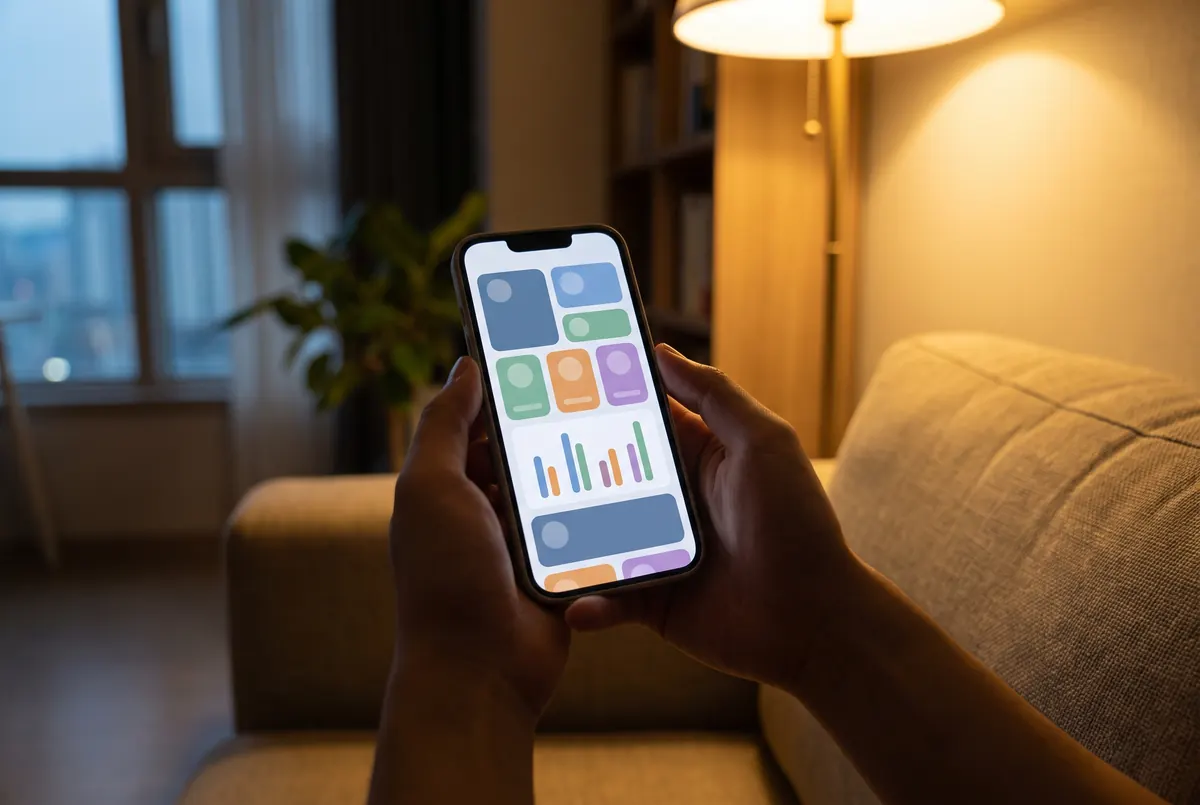
KakaoPay (카카오페이)
Korea's dominant mobile payment platform, integrated with KakaoTalk (the universal messaging app).
- What it does: Peer-to-peer transfers, bill splitting, QR code payments, insurance, investments
- For foreigners: Requires ARC and a linked Korean bank account. Some foreigners report difficulty with identity verification — try Shinhan or Hana Bank as the linked account, as they have better integration. Kakao Bank proper (the savings/checking account) is currently restricted to Korean nationals.
- Why it matters: Nearly every Korean uses KakaoPay. If you're invited to split a restaurant bill, friends will expect you to use it.
Toss (토스)
A rapidly growing fintech app offering banking, investment, insurance, and peer transfers.
- For foreigners: ARC holders can open a full Toss Bank account entirely in the app (available to foreign residents since May 2022), though unsecured loans are not offered to them; the Toss Pay wallet is also accessible
- Why it matters: Excellent interface, English available in some parts of the app, very popular among younger Koreans
Naver Pay (네이버페이)
Integrated with Naver (Korea's dominant search engine and e-commerce platform). Used primarily for online shopping on Naver Smart Store and partner merchants.
K Bank (케이뱅크)
A digital-only bank that is somewhat more accessible to foreigners than KakaoBank. No branches — entirely mobile. Check current ARC acceptance status before attempting to open.
Important Note on Korean Mobile Banking
Korean banking apps have historically been difficult for foreigners due to reliance on Active X plugins, Korean-only identity verification systems, and certificate-based security. The situation has improved significantly since 2023, but you may encounter:
- Requirements for a Korean digital certificate (공동인증서, formerly called 공인인증서) — increasingly replaced by simpler biometric methods
- SMS OTP verification requiring your Korean phone number to match your ARC
- Some features only working on Android or requiring specific security apps
When you open your bank account, ask branch staff to set up mobile banking for you in-branch before you leave — this saves significant frustration at home.
5. Using ATMs in Korea
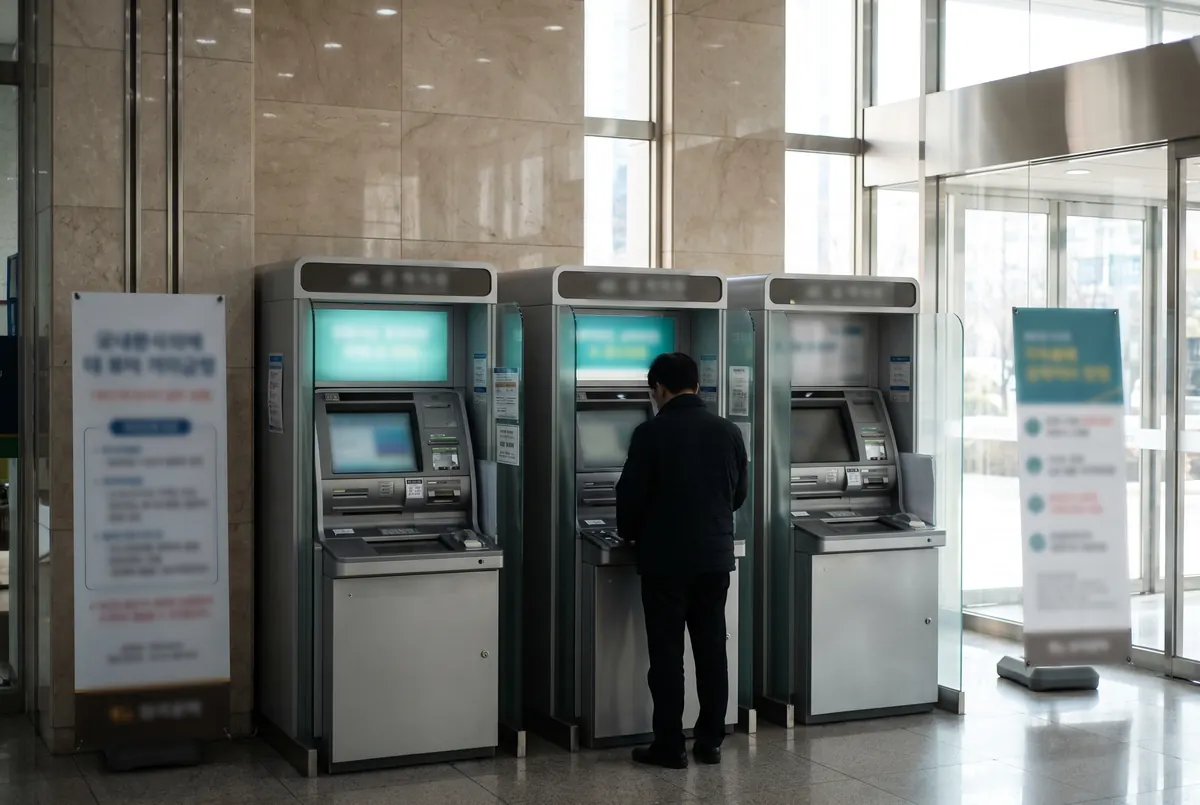
Korean ATMs
Korean ATMs are widely available at bank branches, convenience stores (GS25, CU, 7-Eleven have ATMs), subway stations, and shopping centres.
- Most ATMs operate 24 hours
- Korean ATM interfaces typically offer English language options
- ATM withdrawal fees: ₩0–₩1,000 for using your own bank's ATM; ₩1,000–₩2,000 for using another bank's ATM; additional fees may apply after hours
Using Foreign Cards in Korean ATMs
International Visa, Mastercard, and Union Pay cards work at most Korean ATMs (look for the relevant card logo).
- Fee: Typically ₩3,000–₩5,000 per withdrawal, plus whatever fee your home bank charges and a currency conversion margin
- ATMs accepting foreign cards: Most GS25 and 7-Eleven convenience store ATMs; all major bank ATMs in cities; Incheon Airport ATMs 24 hours
- Daily limit: Most Korean ATMs cap foreign card withdrawals at ₩700,000–₩1,000,000 per transaction
Tip: The Wise card (linked to a Wise multi-currency account) often offers significantly lower ATM fees and mid-market exchange rates versus standard foreign bank cards. Many expats in Korea use Wise as their primary card for the first weeks before their Korean account is set up.
6. International Money Transfers: Sending Money Home
Sending money from Korea to your home country is legal, straightforward, and supported by multiple services. Here's a comparison of your main options.
Legal Framework
Under Korea's Foreign Exchange Transactions Act:
- Foreign residents can remit money abroad freely up to USD 50,000 per year without special documentation (since January 2026 this cap is tracked per person across all banks and remittance apps combined)
- Amounts above USD 50,000 per year require proof of income source (tax certificates, pay stubs)
- All transfers above USD 10,000 per year are reported to the National Tax Service — this is routine and not a problem if your income is legitimate
- Always register the purpose of the transfer (salary, family support, savings) with your bank to avoid delays
Transfer Options Compared
| Service | Fee | Exchange Rate | Speed | Notes |
|---|---|---|---|---|
| Korean bank wire | ₩20,000–₩40,000 flat + 1–2% margin | Bank rate (marked up) | 1–5 business days | Most reliable for large amounts; proof of income may be required for large transfers |
| Wise (TransferWise) | Low variable fee (~0.5–1%) | Mid-market rate | Same day to 2 days | Best rates for most currencies; sending from KRW currently has limitations |
| Sentbe | ₩2,500–₩5,000 flat | Competitive rate | Same day (some routes) | Popular with expats in Korea; easy app; limit USD 5,000/transaction, USD 50,000/year |
| WireBarley | Low variable fee | Competitive | 1–2 days | Good for USD/EUR/CAD routes |
| Hana Easy Remit | ₩5,000 flat | Better than standard bank rate | 1–2 days | Hana Bank product; good for established Hana customers |
| Western Union | Variable (USD 2.90–USD 75+) | Less competitive | Minutes to same day | Widely available; good for cash pickup in recipient country |
Practical tip: For regular monthly remittances, Sentbe or WireBarley are popular among expats for low fees and convenience. For large one-time transfers (above USD 10,000), using your Korean bank directly with advance documentation may be smoother due to compliance requirements.
Receiving Money in Korea
Receiving international transfers into your Korean account is simple. Provide the sender with:
- Your full name (as registered on the bank account)
- Your bank's SWIFT code (each bank has one — ask your branch)
- Your bank account number
- Bank name and branch address (some senders require this)
Incoming international transfers are typically processed within 1–3 business days.
7. Currency Exchange: Getting the Best Rates
Where to Exchange Currency
| Location | Exchange Rate | Notes |
|---|---|---|
| Bank branches | Good (within 1–2% of mid-market) | Official rate; safe; documentation sometimes required for large amounts |
| Myeongdong money changers (Seoul) | Often very competitive | Popular among expats for small-to-medium exchanges; rates posted visibly; no commission |
| Airport exchange counters (Incheon) | Poor (3–5% above market) | Convenient but expensive; only for emergencies |
| ATM withdrawal (foreign card) | Variable — check your card | Often better than airport counters but fee-dependent |
| Wise card | Mid-market rate | Best option for small day-to-day foreign currency needs |
Myeongdong money changers: The unofficial currency exchange offices concentrated in Myeongdong (central Seoul) and some other commercial districts are legal and well-known for competitive rates. They typically do not charge commissions — profit comes from the spread between buy/sell rates. Bring cash, compare 2–3 offices, and avoid those who add commission on top of the posted rate.
Airport Money Exchange
Incheon Airport has bank-operated exchange counters on both the arrival and departure floors. Rates are significantly worse than city alternatives. Exchange only the minimum needed on arrival (₩50,000–₩100,000 for initial transportation and basics), then exchange the rest at a city bank or Myeongdong.
Understanding Korean Exchange Rate Terminology
| Korean Term | Meaning |
|---|---|
| 살 때 (sal ttae) | "When buying" — the rate at which the bank sells you foreign currency (worse for you) |
| 팔 때 (pal ttae) | "When selling" — the rate at which the bank buys foreign currency from you (worse for you) |
| 기준 환율 (gijun hwanyul) | Reference rate / mid-market rate |
| 환전 수수료 (hwanjeon susuryeo) | Currency exchange commission/fee |
8. Korean Credit Cards: Getting One as a Foreigner
Can Foreigners Get a Korean Credit Card?
Yes, but requirements are stricter than for debit cards:
- Stable employment in Korea (employment contract required)
- Minimum 3–6 months of banking history at the issuing bank
- Proof of income (pay stubs or tax documents)
- Korean credit history (built over time through banking activity)
- Some banks require a Korean guarantor for newer residents
Korean banks typically do not consider foreign credit history. You start fresh in Korea's credit system.
How to Build a Credit Profile in Korea
- Open a bank account as soon as you arrive
- Receive your salary into a Korean account
- Set up auto-payments (utilities, NHIS, phone) from your Korean account
- After 3–6 months, apply for a credit card at your primary bank
- Start with a low-limit card and use it regularly — pay in full each month
Major Credit Card Issuers
Korean credit cards are often issued by bank affiliates:
- KB Kookmin Card — largest network; many foreigner-friendly options
- Shinhan Card — good benefits; some English support
- Hyundai Card — popular for lifestyle benefits, design, and English app interface
- Samsung Card — widely accepted; good app
Benefits of Korean Credit Cards
Korean credit cards offer competitive benefits:
- Cashback (캐시백): typically 0.1–1% on spending categories
- Point systems (포인트): major retailer and food delivery discounts
- Transportation card function: some cards double as T-money cards
- Year-end tax deduction: credit card spending above 25% of annual income creates a tax deduction at year-end settlement (see Section 10)
9. Korean Taxes for Foreign Residents
Understanding your Korean tax obligations prevents surprises. Korea's tax system for foreigners is structured but well-documented.
Tax Residency
You are a Korean tax resident if you have a domicile or place of residence in Korea for 183 days or more in a calendar year.
- Tax residents: Taxed on worldwide income at progressive rates
- Non-residents: Taxed only on Korean-sourced income
Most foreigners working in Korea on E-series or F-series visas become tax residents within the same tax year they arrive.
Korean Income Tax Rates (2026)
| Taxable Income (KRW) | Tax Rate |
|---|---|
| Up to ₩14,000,000 | 6% |
| ₩14,000,001–₩50,000,000 | 15% |
| ₩50,000,001–₩88,000,000 | 24% |
| ₩88,000,001–₩150,000,000 | 35% |
| ₩150,000,001–₩300,000,000 | 38% |
| ₩300,000,001–₩500,000,000 | 40% |
| Over ₩500,000,000 | 42–45% |
A local income tax (jibang sodeukse) of 10% of the above rates is added on top.
The 19% Flat Tax Option for Foreigners
This is one of the most important financial facts for foreigners in Korea. Foreign employees can elect to pay a flat 19% income tax rate (20.9% including local tax) on their employment income instead of the progressive rate structure, for up to 20 years from their first day of work in Korea (currently available to those who start working in Korea by 31 December 2026; a pending 2026 tax reform proposal would raise the rate to 21% from 2027 income and extend eligibility to 2029).
- This flat rate replaces Korea's progressive brackets (you still apply for it through your employer's year-end settlement)
- It generally pays off only for high earners: in 2020 year-end settlement data it was advantageous mainly for foreign workers with total salary of ₩200 million or more, while most workers on around ₩100 million or less pay less under the progressive rates
- You cannot claim deductions (medical expenses, credit card, dependants) under this method — only choose it if the flat rate is actually lower than your progressive rate
- Elect this option annually by notifying your employer at the start of the year-end settlement period (January–February)
Consult a Korean tax accountant (세무사) to calculate which option is better for your specific income level and deductions.
Double Taxation Treaties
Korea has tax treaties with over 90 countries to prevent the same income from being taxed twice. If you are paying Korean income tax on Korean-sourced income, your home country should grant you a credit or exemption. The US-Korea tax treaty is particularly relevant for US citizens (who must file US taxes regardless of where they live).
Check your country's treaty status with Korea at the NTS website (nts.go.kr/english).
10. Year-End Tax Settlement (연말정산)
What is 연말정산?
Every January–February, Korean employers conduct a year-end tax settlement (연말정산) for all employees. Throughout the year, income tax is withheld from your salary based on estimates. The settlement calculates your actual tax liability and either:
- Refunds you if you overpaid (Koreans call this the "13th month salary")
- Charges you more if you underpaid
Foreign employees who receive Korean salary income are included in this process, handled by their employer's HR/accounting department.
Who Does NOT Do 연말정산
- Self-employed and freelancers file a separate Comprehensive Income Tax Return (종합소득세) by May 31st each year
- Foreigners who chose the flat 19% tax rate claim no deductions — the settlement simply applies 19% to their total salary, including normally non-taxable allowances
What Can You Deduct?
Foreign residents can claim many of the same deductions as Koreans:
| Deduction Category | Notes |
|---|---|
| Medical expenses | Spending at NHIS-covered hospitals and pharmacies; expenses exceeding 3% of total income |
| Credit/debit card spending | Spending above 25% of annual income creates a deduction (15–40% of the excess, depending on card type) |
| Dependant deductions | For spouse and children with income under ₩1,000,000/year |
| Insurance premiums | NHIS contributions, life insurance |
| Charitable donations | To registered Korean charities |
| Education expenses | For children's tuition (Korean schools; limits apply) |
| Not available to foreigners: | Housing subscription savings deduction (주택청약저축) only. Since the 2021 tax year, resident foreign workers can claim the monthly rent tax credit (월세 세액공제) and housing loan interest deductions on the same conditions as Koreans |
How to File (Employee)
Your employer HR team will guide you. The main tool is the National Tax Service Hometax (국세청 홈택스) system:
- Log in at hometax.go.kr using your ARC number and Korean phone number
- Access 연말정산 간소화 서비스 (Year-End Tax Simplified Service) — this automatically aggregates your medical, insurance, card spending, and other deductible data
- Download your data as a PDF and submit to your employer's HR department by the deadline (usually late January)
- Your employer files the settlement with the NTS by March 10th
- Refunds or additional payments appear in your February or March paycheck
The NTS provides an English version of the simplified service — categories applicable to foreigners are labeled in English. The NTS also has an automatic calculation tool for foreigners at nts.go.kr/english.
Common Mistakes to Avoid
- Claiming a dependant with income over ₩1,000,000 (₩5,000,000 if salary-only) — this invalidates the deduction
- Forgetting your credit card deduction — this is often the largest refund source for active card users
- Not claiming medical expenses — any hospital, clinic, or pharmacy expenses paid out-of-pocket above the 3% of income threshold are deductible
- Assuming your employer covers everything — if you have side income, investment income, or income from multiple employers, you may need to file a separate comprehensive income tax return
11. National Pension for Foreigners
Mandatory Enrollment
Most foreigners working in Korea are enrolled in the National Pension Service (국민연금공단, NPS). The contribution rate is 4.75% of gross salary from both employee and employer (9.5% total in 2026), rising by 0.5 percentage points a year until it reaches 13% in 2033.
Totalization Agreements
Korea has signed Social Security/Totalization Agreements with 43 countries (42 in force as of December 2025) including the USA, Germany, Canada, Australia, UK, France, Japan, and others. Under these agreements:
- You can avoid dual contributions (paying pension in both Korea and your home country simultaneously)
- Your pension contribution periods in both countries can be combined to meet eligibility thresholds for pension benefits
To claim exemption:
- Obtain a Certificate of Coverage from your home country's pension authority confirming you are contributing to your home pension
- Submit this to your employer and the Korean NPS office
- Your employer will then stop deducting Korean pension contributions
Check whether your country has a totalization agreement at the NPS website nps.or.kr (English section available).
Pension Refund on Departure
If you leave Korea permanently, you can receive a lump-sum refund of your Korean pension contributions (plus interest) only if your country grants Koreans an equivalent refund (reciprocity), your country's social security agreement with Korea provides for refunds (e.g., the USA, Canada, Germany, Australia), or you were insured on an E-8, E-9 or H-2 visa. Apply at the NPS office before leaving with your ARC, pension statement, and departure documentation.
12. Investing in Korea: Basics for Foreigners
Can Foreigners Invest in Korea?
Yes. Foreign residents with a valid ARC can open investment accounts and invest in:
- Korean stocks (listed on KRX — KOSPI and KOSDAQ exchanges)
- Korean bonds and government securities
- Mutual funds and ETFs
- Real estate (foreigners can purchase property in most cases, though anti-speculation rules in certain areas apply)
Opening a Securities Account
Most major banks have affiliated securities companies:
- KB Securities (KB국민은행 계열)
- Samsung Securities
- Mirae Asset Securities
- Kiwoom Securities — popular among retail investors; some English support
You can open a trading account at a branch with your ARC and bank account. Korean brokerage apps (MTS — Mobile Trading System) are well-developed but primarily in Korean.
Taxes on Investment Income
- Dividend income: Taxed at a flat 15.4% withholding rate (14% income tax + 1.4% local tax)
- Capital gains (Korean stocks): Currently exempt for small investors; the planned financial investment income tax (금융투자소득세) was abolished by the National Assembly in December 2024, so the existing rules (tax only for large shareholders) continue
- Interest income: Taxed at 15.4% withholding rate
- Foreign-source investment income: Must be declared if you are a Korean tax resident
Reporting Requirements
Foreign residents who hold overseas financial accounts with a combined balance exceeding ₩500 million on the last day of any month of the year must report them to the NTS in June of the following year (foreigners who have lived in Korea for 5 years or less in the past 10 years are exempt). Failure to report carries significant penalties.
13. Financial Scams Targeting Foreigners
Korea is generally safe, but financial scams do target foreigners, particularly newcomers.
Common Scams
Fake investment schemes:
"Too good to be true" investment returns offered through social media or expat group messaging. These often target foreign teachers and workers with promises of cryptocurrency or forex profits. Never invest money through informal channels based on social media recommendations.
Phone scam (보이스피싱, voice phishing):
Callers pretend to be from immigration, the police, or the NTS, claiming you owe fines or are under investigation. They pressure you to transfer money immediately. Korean government agencies never demand money over the phone. Hang up and call the relevant agency directly using their official number.
Phishing bank messages:
Fake SMS messages claiming your account is suspended or that you have received money, with a link to a fake banking site. Never click links in banking SMS messages — go directly to your bank's app or website.
Rental deposit scams:
Covered in the Housing guide — always verify property ownership via 등기부등본 before transferring any deposit.
If You Suspect a Scam
- Financial Fraud Hotline: 1332 (Financial Supervisory Service)
- Police: 112
- National Tax Service: 126
- Report fraudulent banking activity to your bank immediately — Korean banks freeze accounts quickly when fraud is reported
14. Glossary of Korean Banking & Finance Terms
| Korean | Pronunciation | English Meaning |
|---|---|---|
| 은행 | eunhaeng | Bank |
| 계좌 | gyejwa | Bank account |
| 통장 | tongjang | Bank passbook |
| 체크카드 | chekeu kadeu | Debit card |
| 신용카드 | sinyong kadeu | Credit card |
| ATM | ATM | ATM (same word) |
| 현금 | hyeongeum | Cash |
| 이체 | iche | Bank transfer |
| 계좌번호 | gyejwa beonho | Bank account number |
| 공동인증서 (formerly 공인인증서) | gongdong injeungseo | Official digital certificate (for banking auth) |
| 인터넷뱅킹 | internet banking | Online banking |
| 모바일뱅킹 | mobile banking | Mobile banking |
| 해외송금 | haewae songgeum | International money transfer |
| 환전 | hwanjeon | Currency exchange |
| 환율 | hwanyul | Exchange rate |
| 원금 | won-geum | Principal amount |
| 이자 | ija | Interest |
| 이자율 | ijayul | Interest rate |
| 수수료 | susuryeo | Fee / commission |
| 연말정산 | yeonmal jeongsan | Year-end tax settlement |
| 소득세 | sodeukse | Income tax |
| 지방소득세 | jibang sodeukse | Local income tax |
| 원천징수 | woncheon jingsu | Tax withholding at source |
| 세금환급 | segeum hwanggeup | Tax refund |
| 홈택스 | hom-taeksu | Hometax (NTS online tax system) |
| 국세청 | gukse-cheong | National Tax Service (NTS) |
| 국민연금 | gukmin yeon-geum | National Pension |
| 퇴직연금 | toejik yeon-geum | Retirement pension |
| 적금 | jeokgeum | Fixed-term savings account |
| 예금 | yegeum | Savings / deposit account |
| 대출 | daechul | Loan |
| 보이스피싱 | boiseu pi-sing | Voice phishing / phone fraud |
| 세무사 | semusa | Tax accountant |
| 공인회계사 | gongin hoegyesa | Certified Public Accountant (CPA) |
Frequently asked questions
Can foreigners open a bank account in Korea without an ARC?
Some Korean banks will open a basic account with just a passport and visa, but it usually comes with low transfer limits and no internet banking, debit card or payment-app access. A full-featured account normally requires an Alien Registration Card (ARC) and a Korean phone number in your own name. Since March 2025 a growing number of banks also accept the mobile ARC from the government's mobile ID app in place of the plastic card.
How much money can a foreigner send abroad from Korea per year?
Foreign residents can remit up to USD 50,000 a year from Korea without supporting documents. Since January 2026 the Bank of Korea's ORIS system tracks this cap per person across all banks and remittance apps. Larger amounts are allowed when you prove the money comes from Korean earnings, for example with pay slips, an employment contract or a tax payment certificate. Cumulative remittances above USD 10,000 a year are reported to the National Tax Service.
What is the National Pension contribution rate in Korea in 2026?
In 2026 the National Pension contribution is 9.5% of monthly salary: 4.75% deducted from the employee's pay and 4.75% paid by the employer. It is the first increase in 28 years and will rise by 0.5 percentage points every January until it reaches 13% in 2033. Most foreign employees are enrolled; exceptions include people covered by a social security agreement who hold a certificate of coverage from their home pension system.
Can I get my Korean National Pension contributions back when I leave Korea?
Only in certain cases. The National Pension Service pays a lump-sum refund (contributions plus interest) to departing foreigners whose country gives Koreans an equivalent refund, whose country's social security agreement with Korea includes a refund clause (such as the USA, Canada, Germany or Australia), or who were insured on an E-8, E-9 or H-2 visa. Apply at any NPS branch or the Incheon Airport counter with your passport, ARC, bank details and proof of departure.
Should foreigners choose the 19% flat income tax rate in Korea?
Usually only on a very high salary. The flat 19% rate (20.9% with local tax) applies to your whole salary, including normally non-taxable allowances, and removes every deduction and credit, such as card spending, medical costs and the rent credit. Most foreign workers earning around ₩100 million or less pay much less under the progressive rates. The option is open to foreigners who start working in Korea by 31 December 2026, for up to 20 years.
Can foreigners claim the monthly rent tax credit in Korea?
Yes. Since the 2021 tax year, resident foreign workers in Korea can claim the monthly rent tax credit (월세 세액공제) at year-end settlement on the same terms as Koreans: you must have an ARC or domestic residence report, not own a home, stay within the salary cap and housing size or price limits, and have registered the rented address. The credit is 15–17% of the rent paid. It is not available if you elect the flat 19% tax rate.
Official sources
Rules, fees and deadlines change. Confirm the details with the official source before you act.
- National Tax Service (English) nts.go.kr
- Hometax — NTS online tax filing hometax.go.kr
- National Pension Service — Lump-sum Refund for Foreigners nps.or.kr
- Financial Supervisory Service (English) fss.or.kr
- Bank of Korea (English) bok.or.kr
Disclaimer: Tax rates, banking policies, and financial regulations change regularly. The information on this page reflects best available data as of October 2026. Consult the National Tax Service (nts.go.kr/english, hotline 126) and your bank directly for the most current information. For complex tax situations — particularly those involving dual residency, double taxation treaties, foreign income, or investment accounts — consult a qualified Korean tax accountant (세무사) or an international tax professional familiar with Korea.
Last reviewed: · livinginkorea.org